Scientists at the Institute for Nuclear Research at the Hungarian Academy of Sciences (Atomki) have posted findings showing what could be an example of that fifth force at work.
The scientists were closely watching how an excited helium atom emitted light as it decayed. The particles split at an unusual angle -- 115 degrees -- which couldn't be explained by known physics.
The study's lead scientist, Attila Krasznahorkay, told CNN that this was the second time his team had detected a new particle, which they call X17, because they calculated its mass at 17 megaelectronvolts.
"X17 could be a particle, which connects our visible world with the dark matter," he said in an email.
From CNN (previous papers by the same group are linked to in the story with hyperlinks).
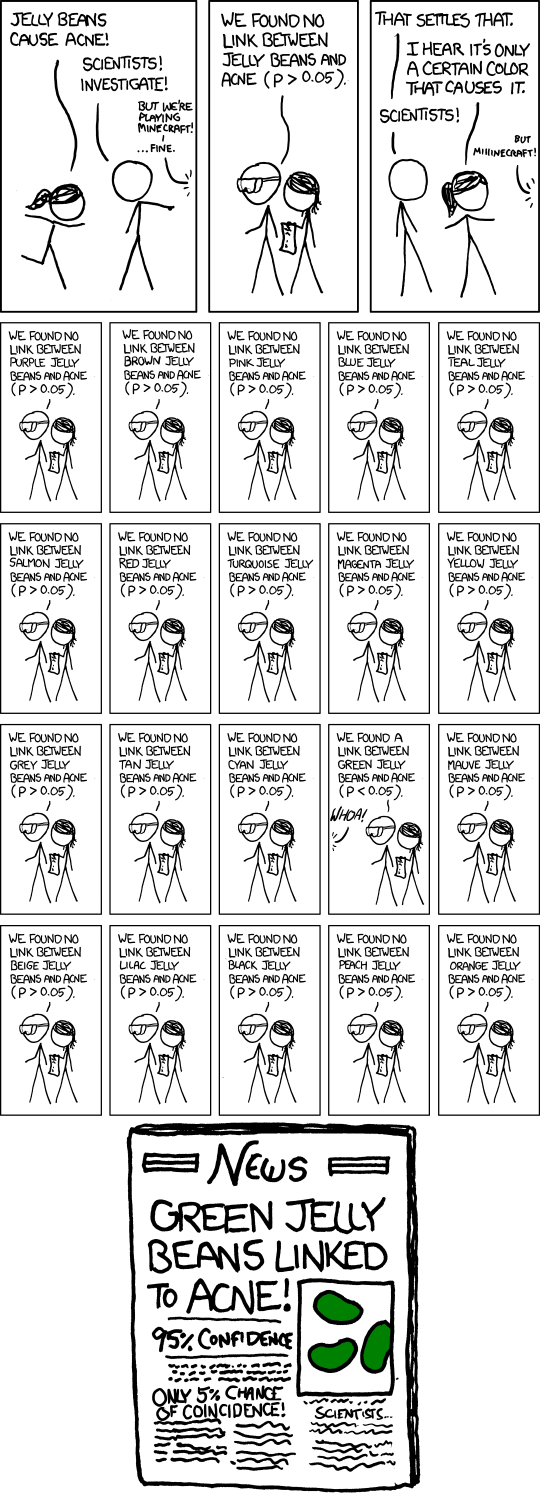
The odds are at least 98% that Hungarian scientists have made some sort of experimental error and have not discovered a fifth force (approximately the precision with which non-Standard Model physics are typically ruled out in broad ranging searches for "new physics" that aren't specifically predicted by a particular hypothesis of interest).
Why?
Because there are a great many experiments that could have detected the 17 MeV mass particle that they claim to have seen (e.g. LEC, Tevatron, LHCb, ATLAS, CMS, Jefferson Labs, etc.) and none of the other experiments have replicated this result. ATLAS and CMS are sensitive to new physics particles up to about 1,000,000,000 MeV of mass. The two experiments at the Tevatron collider were sensitive to particles up to about 200,000 MeV of mass. The LEC was sensitive to particles up to about 100,000 MeV of mass. Particles with masses on the order of 17 MeV have been possible to observe in high energy physics experiments since the 1960s, if not earlier, and nobody has claimed to see them, until now.
More generally, myriad other high energy physics calculations would be affected by such a fifth force but are adequately explained by the plain old three forces of the Standard Model (also ignoring gravity).
17 MeV is about 34 times the mass of an electron, a muon is about 6 times as massive as 17 MeV, a pion (the lightest particle made out of quarks, which never appear in isolation in the real world) is about 8 times as massive as 17 MeV, and a proton or neutron is about 54 times as massive as 17 MeV. Neutrinos are on the order of a million or more times less massive than 17 MeV.
Particles such as this hypothetical particle, which purportedly have effects which can be seen electromagnetically (such as interactions involving the emission of light as claimed in this article), are particularly easy to see experimentally, because experimental electromagnetic measurements are among the most precise of all kinds of scientific measurements. The polarization and energies of single photons can be measured with modern physics instrumentation.
17 MeV is also a poor fit to most astronomy data related to hypothetical dark matter particle candidates based upon the inferred mean velocity of dark matter particle candidates in thermal freeze out scenarios, which tend to favor "warm dark matter" candidates on the order of 10,000 times less massive than 17 MeV.
Also, while a helium atom may seen pretty simple (usually two protons and two neutrons), this atom is close to the boundary of what it is possible to calculate from first principles from the Standard Model of Physics, and "hadronic matter" (i.e. particles made up of bound compound particles made of quarks), which is described with a combination of the strong force described by quantum chromodynamics (QCD), the electromagnetic force described by quantum electrodynamics (QED), and the Standard Model physics of the weak force, are exceedingly challenging to model mathematically from first principles. Almost all such calculations, in practice, are done using numerical approximations that each have their flaws and are least reliable in the low energy regimes (i.e. for masses and energies on the order of 2 GeV or so, plus or minus, with a helium atom having a mass of approximately 4 GeV) in which QCD calculations become "non-perturbative" (which basically means highly non-linear).
How else can you tell?
Any genuinely plausible experimental anomaly routinely results in hundreds of research papers attempting to explain this phenomena written by physicists all over the world, in a matter of weeks. This paper has generated no such academic interest, effectively illustrating an implicit form of negative peer review. If the claims of a fifth force held water, the physics pre-print depositor arXiv would be full of papers trying to explain this anomaly and it isn't.