Wednesday, July 22, 2020

Paleo-Americans?

It is no secret that I have long been on skeptical side of the debate around whether modern humans were present in the Americas outside the Beringian land bridge between Siberia and Alaska until the tail of of the ice age that produced the Last Glacial Maximum about 26,000 years ago. The pre-Clovis arrival of members of the Founding population of the Americas to North and South America via a Pacific route became part of the paradigm long ago. 

But evidence of a hominin presence in the Americas during or before the Last Glacial Maximum ice age has relied on very small numbers of objects that are only arguably stone tools at various sites, with equivocal attempts at dating them, and no human remains. 

Two new articles in the leading scientific journal Nature may tip the balance, although I am still not unequivocally convinced, in part, because the studies fail to address by this pilot wave founding population would have had so slight an archaeological and ecological impact.

An account at NBC News explains in an article that is mostly correct and makes only subtle errors where it is not quite right:

Pieces of limestone from a cave in Mexico may be the oldest human tools ever found in the Americas, and suggest people first entered the continent up to 33,000 years ago – much earlier than previously thought. 
The findings, published Wednesday in two papers in the journal Nature, which include the discovery of the stone tools, challenge the idea that people first entered North America on a land bridge between Siberia and Alaska and an ice-free corridor to the interior of the continent.

Precise archaeological dating of early human sites throughout North America, including the cave in Mexico, suggests instead that they may have entered along the Pacific coast, according to the research. . . . 
The commonly accepted time for the arrival of the first people in North America is about 16,000 years ago, and recent studies estimate it happened up to 18,000 years ago. But the latest discoveries push the date back by more than 10,000 years. 
The NBC article linked about says this about the first article discussing an excavation deep into a cave high on a mountain in Mexico: 
Ciprian Ardelean, an archaeologist with the Autonomous University of Zacatecas in Mexico, the lead author of one of the papers, said the finds were the result of years of careful digging at the Chiquihuite Cave in north-central Mexico. 
The steeply-inclined cave is high on a mountainside and filled with crumbling layers of gravel: “The deeper you go, the higher the risk for the walls to collapse,” he said. 
A shaped limestone point, one of the stone tools found at the Chiquihuite Cave in central Mexico that archaeologists think dates from around 30,000 years ago, before the last Ice Age.
The excavations paid off with the discovery of three deliberately-shaped pieces of limestone — a pointed stone and two cutting flakes — that may be the oldest human tools yet found in the Americas. 
They date from a time when the continent seems to have been occupied by only a few groups of early humans – perhaps “lost migrations” that left little trace on the landscape and in the genetic record, Ardelean said. 
The tools were found in the deepest layer of sediment they excavated, which dates from up to 33,000 years ago – long before the last Ice Age, which occurred between 26,000 and 19,000 years ago. . . . 
“You have to live there and cook there, because it takes you a whole day to go back and forth from the town, and it’s a five-hour climb,” he said. “It is a logistical nightmare.”
More tools were found in sediments laid down during and after the Ice Age, and indicate the cave was occupied for short periods over thousands of years, maybe by nomadic people who knew of it from ancestral legends. 
The Chiquihuite Cave is high on a mountain, at an altitude of above 8,800 feet, and the interior is very steep. . . . 
“I think it was a refuge used occasionally and periodically,” Ardelean said. “Even if you never saw the site before, your grandparents had told you about it and there were indications when you got there.” 
The presence of stone tools from the Ice Age – known to archaeologists as the Last Glacial Maximum, or LGM – suggested people occupied the cave even before that. 
Much of North America was then covered with thick ice sheets that would have made migrations impossible, he said: “If you have people during the LGM, it is because they entered the continent before the LGM.” 
The first article and its abstract are:
The initial colonization of the Americas remains a highly debated topic, and the exact timing of the first arrivals is unknown. The earliest archaeological record of Mexico—which holds a key geographical position in the Americas—is poorly known and understudied. Historically, the region has remained on the periphery of research focused on the first American populations. 
However, recent investigations provide reliable evidence of a human presence in the northwest region of Mexico, the Chiapas Highland, Central Mexico and the Caribbean coast, during the Late Pleistocene and Early Holocene epochs. Here we present results of recent excavations at Chiquihuite Cave—a high-altitude site in central-northern Mexico—that corroborate previous findings in the Americas of cultural evidence that dates to the Last Glacial Maximum (26,500–19,000 years ago), and which push back dates for human dispersal to the region possibly as early as 33,000–31,000 years ago. 
The site yielded about 1,900 stone artefacts within a 3-m-deep stratified sequence, revealing a previously unknown lithic industry that underwent only minor changes over millennia. More than 50 radiocarbon and luminescence dates provide chronological control, and genetic, palaeoenvironmental and chemical data document the changing environments in which the occupants lived. 
Our results provide new evidence for the antiquity of humans in the Americas, illustrate the cultural diversity of the earliest dispersal groups (which predate those of the Clovis culture) and open new directions of research.
Ardelean, C.F., Becerra-Valdivia, L., Pedersen, M.W. et al. "Evidence of human occupation in Mexico around the Last Glacial Maximum." Nature (July 22, 2020). https://doi.org/10.1038/s41586-020-2509-0 (citations in abstract omitted).

The NBC article linked about says this about the second article:  
Lorena Becerra-Valdivia, an archaeological scientist at the University of Oxford and the University of New South Wales, and Thomas Higham, a radiocarbon dating specialist at the University of Oxford, compared the dates from the cave sediments with other archaeological sites in North America. 
Their research indicates very small numbers of humans probably lived in parts of North America before, during and immediately after the last Ice Age, but the human population grew much larger after a period of abrupt global warming that began about 14,700 years ago. 
The study also suggested some people had entered the Americas before 29,000 years ago, possibly along the Pacific coast, when the land bridge between Siberia and Alaska was completely or partially submerged, Becerra-Valdivia said. . . . 
Anthropologist Matthew Des Lauriers of California State University, San Bernardino, who was not involved in the studies, said they “pushed the boundaries” of knowledge about the earliest human arrival in the Americas. 
But he questioned how ancient people who had been in the Americas for more than 25,000 years could have remained “archaeologically invisible” for over 10,000 years.
He said that archaeologists in Australia and Japan, for example, had no difficulty finding evidence of human occupation from that time. 
The second article and its abstract are: 
The peopling of the Americas marks a major expansion of humans across the planet. However, questions regarding the timing and mechanisms of this dispersal remain, and the previously accepted model (termed ‘Clovis-first’)—suggesting that the first inhabitants of the Americas were linked with the Clovis tradition, a complex marked by distinctive fluted lithic points—has been effectively refuted. 
Here we analyse chronometric data from 42 North American and Beringian archaeological sites using a Bayesian age modelling approach, and use the resulting chronological framework to elucidate spatiotemporal patterns of human dispersal. We then integrate these patterns with the available genetic and climatic evidence. 
The data obtained show that humans were probably present before, during and immediately after the Last Glacial Maximum (about 26.5–19 thousand years ago) but that more widespread occupation began during a period of abrupt warming, Greenland Interstadial 1 (about 14.7–12.9 thousand years before AD 2000). 
We also identify the near-synchronous commencement of Beringian, Clovis and Western Stemmed cultural traditions, and an overlap of each with the last dates for the appearance of now-extinct faunal genera. Our analysis suggests that the widespread expansion of humans through North America was a key factor in the extinction of large terrestrial mammals.
Lorena Becerra-Valdivia, Thomas Higham, "The timing and effect of the earliest human arrivals in North America" Nature (July 22, 2020) DOIhttps://doi.org/10.1038/s41586-020-2491-6 (citations in abstract ommitted).

Wednesday, July 15, 2020

Relativistic MOND Theory Used To Reproduce CMB

A relativistic generalization of Milgrom's MOND theory that explains dark matter phenomena as a gravity modification has been fit to the cosmic microwave background (CMB) power spectrum.

Conventional wisdom has long argued that only dark matter particle theories could explain, although I had long suspected that if MOND could reproduce dark matter phenomena at galactic scales, that a generalization of it could so so at cosmological scales.

This is a huge boost to the gravity modification side in the "dark matter v. MOND" wars within astrophysics and cosmology.
Constantinos Skordis and Tom Złosnik. . . . have shown a version of a relativistic MOND theory (which they call RelMOND) . . . does fit the CMB power spectrum. Here is the plot from their paper:


The paper and its abstract are:
We propose a relativistic gravitational theory leading to Modified Newtonian Dynamics, a paradigm that explains the observed universal acceleration and associated phenomenology in galaxies. We discuss phenomenological requirements leading to its construction and demonstrate its agreement with the observed Cosmic Microwave Background and matter power spectra on linear cosmological scales. We show that its action expanded to 2nd order is free of ghost instabilities and discuss its possible embedding in a more fundamental theory.
Constantinos Skordis, Tom Złosnik, "A new relativistic theory for Modified Newtonian Dynamics" arXiv (June 30, 2020).

Theories Of Everything

I agree with basically every single word of Sabine Hossenfelder's recent post at her blog "Backreaction" entitled "Do we need a theory of everything?" (with the possible exception of her stylistic choices in her associated podcast video which I didn't watch).

TOEs in a nutshell

She argues, and I agree, that we know we need a theory of quantum gravity, but we do not need a "Grand Unified Theory" (GUT) that finds a common symmetry group for the entire Standard Model, nor do we need a theory of quantum gravity and a the Standard Model forces to be unified in a single symmetry group constituting a "Theory of Everything" (TOE) in sensu stricto.

I agree that all GUTs and TOEs proposed to date that are capable of being falsified have been falsified, and that there is no positive unexplained experimental evidence that can only be solved by a GUT or TOE. 

Early GUTs looked promising, but the most naive and obvious efforts to construct them predicted things like proton decay, flavor changing neutral currents at the tree level, neutrinoless double beta decay, sterile neutrinos, and electroweak scale supersymmetric particles, that have not been observed at a statistically significant level in replicated results at this time.

I agree that trying to find a GUT or TOE by building an expensive new collider employing thousands of scientists does not itself justify that effort relative to other ways that scarce funds available for scientific research could be spent, although there are other scientific justifications for these projects even though they are less compelling (they keep thousands of HEP physics employed testing the limits of science, bring greater precision to our measurement of Standard Model parameters, and promote the development of new technologies and calculation methods developed for the purpose of conducting the experiments that have value of their own).

I agree that "beauty" and "naturalness" have a pretty poor track record of motivating break throughs in physics, and in particular, have not been useful guides for high energy physics theorists in the last four decades. But, I am not quite as bearish as Dr. Hoffenfelder about the potential for these kinds of intuitions to provide at least some useful guidance in hypothesis generation in fundamental physics.

I would add a few additional observations, however, because I wouldn't have a science blog if that wasn't what I did.

No part of Core Theory has been falsified, despite decades of attempts to do so.

General relativity with a cosmological constant is a century old theory. The lion's share of the Standard Model of Particle Physics is forty years old and the modifications to it since then have been relatively minor. These combined constitute "Core Theory"

No experimental evidence has ever disproved any part of the current version of the Standard Model of Particle Physics, mostly put in place in the late 1970s, as modified later to include three generations of fundamental fermions, and either two or three massive, active, Standard Model neutrinos with three weak force flavors and three mass eigenstates that oscillate pursuant to the PMNS matrix.

Likewise, no experimental or observational evidence has ever disproved General Relativity with a cosmological constant as currently operationalized.

I use the phrase "as currently operationalized" because some credible physicists think that the axioms of General Relativity are conceptually sound and correct descriptions of reality but that there are flaws in how we apply or "operationalize" General Relativity to real world phenomena that are incorrect in some manner and that if operationalized correctly, we would have a more accurate description of reality. By using this limitation to what I am talking about when I talk about General Relativity, I am treating proposals to change how we operationalize General Relativity that lead to different predictions than General Relativity as currently operationalized as a form of "BSM" physics.

There are a number of currently unresolved experimental tensions with Core Theory that are not yet significant enough to necessitate "new physics."

This isn't to say that there aren't tensions in the observational and experimental data that could cause this reality to cease to be true. But, none of those tensions have met the gold standard of five standard deviation departures from Standard Model predictions that have been replicated by credible independent experimental groups.

Some of the most notable of these tensions, although certainly not anywhere near a complete list, are: 

(1) the discrepancy between the experimentally measured value of the anomalous magnetic moment of the muon and the Standard Model prediction, 

(2) suggestions of violation of charged lepton universality (i.e. that electrons, muons and tau leptons behave identically except for their different masses), and 

(3) tensions in measurements of the Hubble constant and other astronomy observations favoring explanations of dark energy phenomena other than a simple cosmological constant.

There are at least half a dozen to a dozen other statistical significant experimental tensions with the Standard Model that fall in the two to five standard deviation from the predicted value range.

Some previously significant tensions, like the Pioneer anomaly and the muonic hydrogen radius problem, have disappeared as better measurements and better analysis has eliminated these tensions without resorting to "new physics." Conventional wisdom is that the same fate awaits most of the existing experimental tensions with Core Theory.

There are other experimental claims that are nominally more statistically significant than the five sigma discovery threshold that have not been replicated. 

For example, a Moscow experiments claims to have seen neutrinoless double beta decay, that other experiments claims to have ruled out. Other experiments claims to have directly detected dark matter particles or sterile neutrinos that other experiments claim to have ruled out. And, another experiment claims to have detected a 17 MeV particle known as X17 that other experiments purport to have ruled out. An experiment in Italy claimed to have seen superluminal neutrinos which would be contrary to the Standard Model and special relativity, until a flaw in its experimental equipment was discovered.

Conventional wisdom is that each of these apparent discoveries are either actually cases of experimental or theoretical error of an undetermined nature by the scientists making the claims, or will confirmed as soon as another group of scientists gets around to trying to replicate the results (which can take years and millions or even billions of dollars of funding to do).

Core Theory doesn't answer every question we'd ideally like it to be able to answer.

This also isn't to say that the "Core Theory" of the Standard Model and General Relativity with a cosmological constant as currently operationalized, is a "complete" theory that explains everything that we would like it to explain. Most notably, Core Theory:

* does not explain the reason that its roughly two dozen experimentally measured parameters take the values that they do;

* does not explain the mechanism by which Standard Model neutrinos acquire mass;

* does not explain the process by which matter in the form of baryons and leptons came into existence in a manner in which almost all baryons and charged leptons are made of matter rather than antimatter; and

* does not answer other questions about how the conditions of the universe at times prior to Big Bang Nucleosynthesis came to be.

Of course, there are also myriad other scientific questions that Core Theory doesn't answer, because they deal with complex phenomena which should be capable of being understood with Core Theory working from first principles, but in practice, are too complex to be derived from the bottom up in that manner, even though Core Theory can qualitatively inform our understanding of these phenomena.

For example, you can't directly apply Core Theory to learn how many species of dolphins there are in the world, or how to build a better battery, or how to cure cancer, or what the best way is to predict major earthquakes are far as possible in advance. Core Theory ideally gives us the fundamental laws of Nature, but applying them gives rise to emergent phenomena that can't be easily predicted from knowledge of those laws of Nature alone.

We know that we need BSM physics to explain reality and haven't found it yet.

In addition to things left unexplained by Core Theory, we also know that some parts of Core Theory must be wrong because the Standard Model and General Relativity have theoretical inconsistencies and fail to explain, at a minimum, dark matter phenomena.

The most profound and glaring is unsolved problem in fundamental physics is the observation of "dark matter phenomena" which at far more than a five sigma "discovery" threshold of statistical significance cannot be explained with the Standard Model and with General Relativity with a cosmological constant as currently operationalized. Beyond the Standard Model and beyond "core theory" physics (i.e. "BSM physics" or "new physics") are needed to explain these phenomena. 

No complete dark matter particle theory, and no gravity modification or quantum gravity theory, and no combination of these theories, have solved the dark matter problem in a manner that has gained wide acceptance among physicists. 

All of the most popular explanations of dark matter phenomena fail in some respect or other to explain some dark matter phenomena in a manner consistent with observational evidence. Many of the less popular explanations of dark matter phenomena have simply not be vetted well enough to know whether or not there is evidence that these theories cannot explain, and are thus, not ripe to receive wide acceptance in the scientific community.

This fact alone means that even if there is a TOE in sensu stricto out there to be discovered that it would not simply be the Standard Model attached to a theory of quantum gravity that exactly replicates General Relativity with a cosmological constant except in technical respects that can't currently be observed. A TOE would have to cover everything explained by Core Theory and also some additional BSM physics.

There is good reason to think that a correct theory of quantum gravity, should we devise one, will shed light on a number of outstanding unsolved problems in physics, in addition to the mere technical and logical inconsistencies between classically formulated General Relativity with a cosmological constant.

A theory of quantum gravity might explain dark matter phenomena, might provide an alternative explanation of dark energy phenomena, and might also resolve one or more other unsolved problems in physics, particularly in the subfield of cosmology.

In particular, Deur's work on quantum gravity purports to formulate an alternative that largely reduces to general relativity without a cosmological constant in the classical strong field limit and to explain dark matter and dark energy phenomena as second order quantum gravity effects visible only in very weak gravitational fields, as well as resolving a number of other less pressing unsolved problems in astrophysics and cosmology. It is one of the only outstanding theory of which I am aware which purports to be able to do so in all circumstances that has not been falsified in any situation. But because it hasn't been sufficiently vetted yet by other scientists, the lack of falsification could be due to lack of scientific attention, rather than due to the soundness of the theory.

We have a Core Theory explanation of dark energy, but it is hard to reconcile with many plausible solutions to the quantum gravity problem.

It is also worth observing that while "dark energy" is commonly viewed as an unsolved problem in physics, that General Relativity plus a cosmological constant is one explanation of "dark energy" that is consistent with all observed dark energy phenomena to within experimental uncertainties (although there are some developing tensions that could grow strong as our astronomy observations grow more precise and change this status quo).

But it is much easier to formulate a theory of quantum gravity that replicates, in the classical limit, General Relativity as currently operationalized without a cosmological constant, than it is to do so with a cosmological constant. This is because most quantum theories are described locally, while the cosmological constant is a global rather than a local aspect of the classical theory that is General Relativity. 

It isn't impossible to add a cosmological constant to a quantum gravity theory. One way to do so is to add a particle in addition to a graviton to a quantum gravity theory to describe the cosmological constant. There is also a class of quantum gravity theory where it is somewhat less problematic to include a cosmological constant type term, because they utilize quanta of the space-time background (one way to describe the cosmological constant is as the innate curvature of a space-time vacuum or brane), rather than, or in addition to, a carrier boson of the gravitational force known as the graviton which is analogous to a photon (in the case of the electromagnetic force in the Standard Model) or a gluon (in the case of the strong force in the Standard Model).

For this reason, active investigation of alternative ways to explain dark energy phenomena goes hand in hand with research in to a theory of quantum gravity. It seems quite plausible that we may need to undo some of the grand and simple General Relativity with a cosmological constant solution to the question of gravity in order to get to a theoretically consistent theory of quantum gravity. 

Tuesday, July 14, 2020

Tocharian

Language log has a detailed guest post on the now extinct Tocharian languages, the most eastern branch of the Indo-European language family.

There are lots of questions and issues raised, and many facts pointed out, but few dots connected.

Not An ET Impact Near Miami, Florida During Human Prehistory

A hypothesized impact crater near Miami, Florida turned out to be something else.

This investigation addresses the discovery of a proposed impact crater located off the coast of Miami, FL under the North Atlantic Ocean. 
A preliminary analysis of bathymetry data obtained from the National Oceanic and Atmospheric Administration implied a morphology consistent with a complex crater produced by a hypervelocity impact event of extraterrestrial origin. The proposed impact features include a central peak, concentric rings, and an ejecta field to the northwest. 
Analysis of geological data from the US Geological Survey places the strata overlying the proposed impact site as Miami Limestone, Pleistocene, accumulated during Marine Isotope Stage 5e, thereby placing the maximum age of the proposed impact crater at 80 ka to 130 ka. 
Three other competing hypotheses for the formation of the structure, namely a controlled maritime explosion, radial lava flow from volcano, or a depressed bioherm, doline, or karst (solutional depression) were explored throughout the investigation. To confirm the proposed structure as an impact crater, an in-situ underwater expedition was organized by Planetary Sciences, Inc. specifically to ascertain whether planar formations, shatter cones, and shock metamorphic and or other meteoritic properties were present. 
After analyzing the geological samples collected at the proposed impact crater, examining the morphology of analogous geologic structures, and evaluating competing hypotheses, we conclude that the structure is a solutional doline formed by the uneven dissolution of the Miami Limestone, and, accordingly, do not recommend that the structure be indexed in the Earth Impact Database.

Antonio Paris, Ryan Robinson, Sky Schwartz, "Proposed Miami Impact Crater Identified as a Solutional Doline of Oolictic Limestone" arVix (June 13, 2020).


Thursday, July 9, 2020

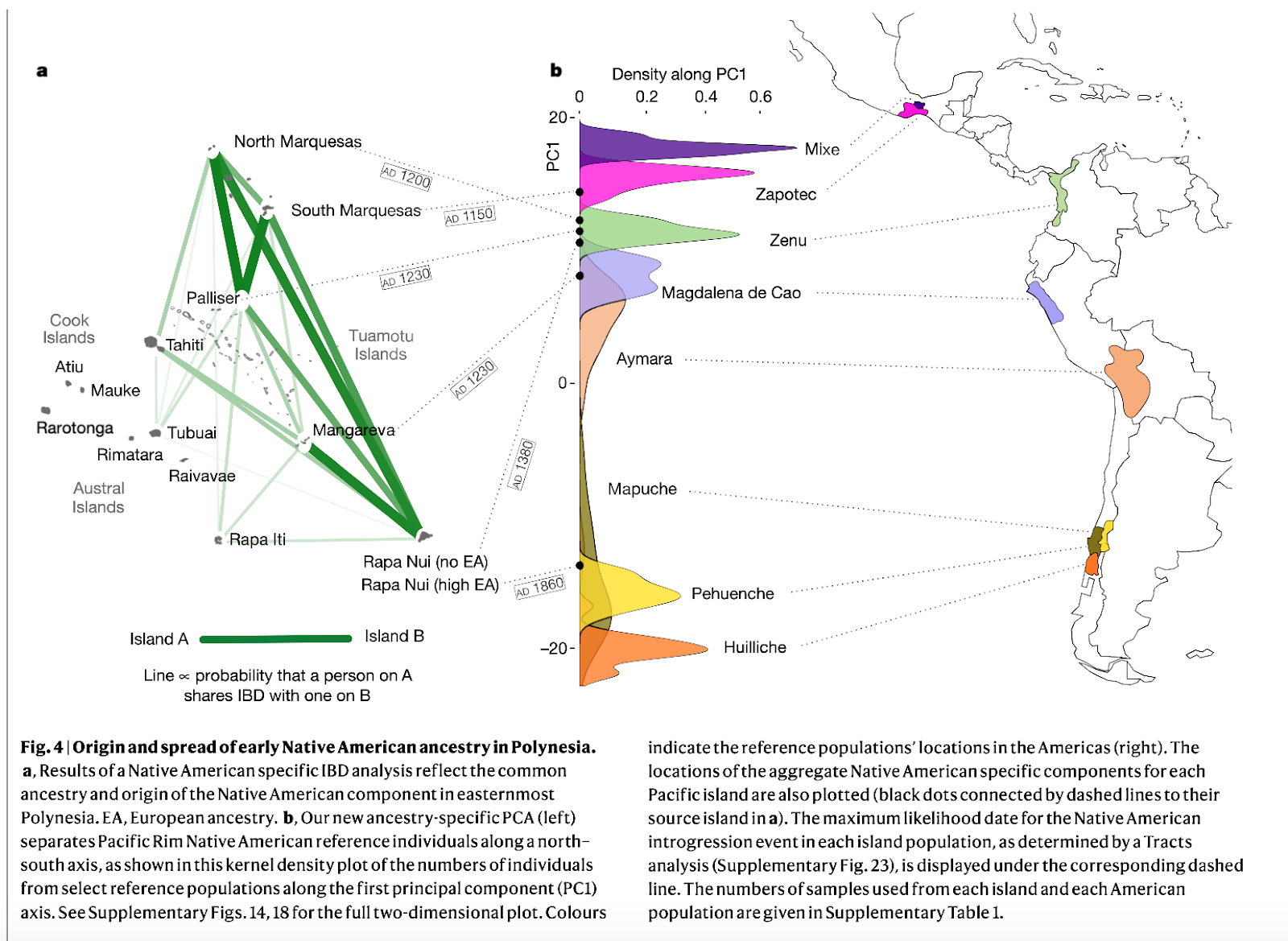
DNA Evidence Of Polynesian Admixture With Native Americans Ca. 1200 CE

This has long been suspected, but the new evidence that it predated settlement of Easter Island is an interesting and novel twist to the hypothesis that the DNA evidence otherwise confirms.


The possibility of voyaging contact between prehistoric Polynesian and Native American populations has long intrigued researchers. Proponents have pointed to the existence of New World crops, such as the sweet potato and bottle gourd, in the Polynesian archaeological record, but nowhere else outside the pre-Columbian Americas, while critics have argued that these botanical dispersals need not have been human mediated. The Norwegian explorer Thor Heyerdahl controversially suggested that prehistoric South American populations had an important role in the settlement of east Polynesia and particularly of Easter Island (Rapa Nui). Several limited molecular genetic studies have reached opposing conclusions, and the possibility continues to be as hotly contested today as it was when first suggested. 
Here we analyse genome-wide variation in individuals from islands across Polynesia for signs of Native American admixture, analysing 807 individuals from 17 island populations and 15 Pacific coast Native American groups. We find conclusive evidence for prehistoric contact of Polynesian individuals with Native American individuals (around AD 1200) contemporaneous with the settlement of remote Oceania. Our analyses suggest strongly that a single contact event occurred in eastern Polynesia, before the settlement of Rapa Nui, between Polynesian individuals and a Native American group most closely related to the indigenous inhabitants of present-day Colombia.
Ioannidis, A.G., Blanco-Portillo, J., Sandoval, K. et al. "Native American gene flow into Polynesia predating Easter Island settlement." Nature (July 8, 2020). https://doi.org/10.1038/s41586-020-2487-2 Some of the literature cited in the paper is below the fold. (Open access for a limited time).

Razib Khan, who has interviewed one of the authors regarding this paper, notes:

The major finding using high density SNP chips and local ancestry deconvolution seems to be that a group of people from mainland South America, probably coastal Columbia, was admixed into the population of the Marquesas. It is from the Marquesas that this genetic ancestry propagated across the eastern fringe of Oceania, including Easter Island.
A comment at the linked post notes that:
Wilmshurst et al. 2011 established that the remoter parts of Polynesia were discovered in a single pulse 1190-1290 so it lines up nicely.  
The abstract of the referenced PNAS paper is as follows: 
The 15 archipelagos of East Polynesia, including New Zealand, Hawaii, and Rapa Nui, were the last habitable places on earth colonized by prehistoric humans. The timing and pattern of this colonization event has been poorly resolved, with chronologies varying by >1000 y, precluding understanding of cultural change and ecological impacts on these pristine ecosystems. In a meta-analysis of 1,434 radiocarbon dates from the region, reliable short-lived samples reveal that the colonization of East Polynesia occurred in two distinct phases: earliest in the Society Islands A.D. ∼1025–1120, four centuries later than previously assumed; then after 70–265 y, dispersal continued in one major pulse to all remaining islands A.D. ∼1190–1290. We show that previously supported longer chronologies have relied upon radiocarbon-dated materials with large sources of error, making them unsuitable for precise dating of recent events. Our empirically based and dramatically shortened chronology for the colonization of East Polynesia resolves longstanding paradoxes and offers a robust explanation for the remarkable uniformity of East Polynesian culture, human biology, and language. Models of human colonization, ecological change and historical linguistics for the region now require substantial revision.
The exchange may not have been entirely one directional. There is evidence of chickens with Asian origins arriving in South America. 
Two issues long debated among Pacific and American prehistorians are (i) whether there was a pre-Columbian introduction of chicken (Gallus gallus) to the Americas and (ii) whether Polynesian contact with South America might be identified archaeologically, through the recovery of remains of unquestionable Polynesian origin. We present a radiocarbon date and an ancient DNA sequence from a single chicken bone recovered from the archaeological site of El Arenal-1, on the Arauco Peninsula, Chile. These results not only provide firm evidence for the pre-Columbian introduction of chickens to the Americas, but strongly suggest that it was a Polynesian introduction.
Alice A. Storey, et al., "Radiocarbon and DNA evidence for a pre-Columbian introduction of Polynesian chickens to Chile", 104(25) PNAS 10335-10339 (June 19, 2007).

Sunday, July 5, 2020

The Population History Of Tibet

The Sino-Tibetan languages originate in lowland northern China in the Neolithic era, and not in Tibet. 
Archeologically attested human occupation on the Tibet Plateau (TP) can be traced back to 160 thousand years ago (kya, Xiahe) via archaic people and 30~40 kya via anatomically modern human in Nwya Devu. However, the past human movements and peopling of the TP keep in its infancy in the modern/ancient DNA studies. Here, we performed the first modern/ancient genomic meta-analysis among 3,017 Paleolithic to present-day eastern Eurasian genomes (2,444 modern individuals from 183 populations (including 98 U-Tsang/Ando/Kham Tibetans) and 573 ancients (including 161 Chinese ancients first meta-analyzed here)). 
Closer genetic connection between ancient-modern highland Tibetans and lowland island/coastal Neolithic northern East Asians was identified, reflecting the main ancestry of high-altitude Tibeto-Burman speakers originated from the ancestors of Houli/Yangshao/Longshan ancients in the middle and lower Yellow River basin, consistent with the common North-China origin of Sino-Tibetan language and dispersal pattern of millet farmers. Although the shared common northern East Asian lineage between Tibetans and lowland East Asians, we still identified genetic differentiation between Highlanders and lowland northern East Asians, the former harboring more deeply diverged Hoabinhian/Onge ancestry and the latter possessing more modern Neolithic southern East Asian and Siberian ancestry, which suggested the co-existence of Paleolithic and Neolithic ancestries in modern and Neolithic East Asian Highlanders. 
Tibetans from U-Tsang/Ando/Kham Tibetan regions showed strong population stratifications consistent with their cultural backgrounds and geographic terrains (showed as barriers for human movements): stronger Chokhopani affinity in U-Tsang Tibetans, more western Eurasian ancestry in Ando and greater Neolithic southern East Asian ancestry in Kham Tibetan. Modern combined ancient genomes documented multiple waves of human migrations in TP past: the first layer of local Hunter-Gatherer mixed with Qijia Farmer arose the Chokhopani-associated Proto-Tibetan-Burman, admixture with the additional genetic materials from the western Eurasian steppe, Yellow River and Yangtze River respectively gave rise to modern Ando, U-Tsang and Kham Tibetans.
Mengge Wang, et al., "Peopling of Tibet Plateau and multiple waves of admixture of Tibetans inferred from both modern and ancient genome-wide data" bioRxiv (July 3, 2020). doi: https://doi.org/10.1101/2020.07.03.185884

Han Chinese Population Structure

The distinctions are subtle, but with enough data the modern Han Chinese can be deconstructed to reveal distinct ancestral groups that are dissolving into each other in the biggest cities of China. 

Han Chinese is the most populated ethnic group across the globe with a comprehensive substructure that resembles its cultural diversification. Studies have constructed the genetic polymorphism spectrum of Han Chinese, whereas high-resolution investigations are still missing to unveil its fine-scale substructure and trace the genetic imprints for its demographic history. Here we construct a haplotype network consisted of 111,000 genome-wide genotyped Han Chinese individuals from direct-to-consumer genetic testing and over 1.3 billion identity-by-descent (IBD) links. We observed a clear separation of the northern and southern Han Chinese and captured 5 subclusters and 17 sub-subclusters in haplotype network hierarchical clustering, corresponding to geography (especially mountain ranges), immigration waves, and clans with cultural-linguistic segregation. We inferred differentiated split histories and founder effects for population clans Cantonese, Hakka, and Minnan-Chaoshanese in southern China, and also unveiled more recent demographic events within the past few centuries, such as Zou Xikou and Chuang Guandong. The composition shifts of the native and current residents of four major metropolitans (Beijing, Shanghai, Guangzhou, and Shenzhen) imply a rapidly vanished genetic barrier between subpopulations. Our study yields a fine-scale population structure of Han Chinese and provides profound insights into the nation's genetic and cultural-linguistic multiformity.
Ao Lan, et al, "Fine-scale Population Structure and Demographic History of Han Chinese Inferred from Haplotype Network of 111,000 Genomes" bioRxiv (July 3, 2020) doi: https://doi.org/10.1101/2020.07.03.166413

Friday, July 3, 2020

Pre-Holocene Mining Operations In Mexico

Pre-Neolithic modern human hunter-gatherers in the Americas weren't unsophisticated.
Investigations in the now-submerged cave systems on the Yucatán Peninsula continue to yield evidence for human presence during the Pleistocene-Holocene transition. Skeletal remains are scattered throughout the caves of Quintana Roo, most representing individuals who died in situ. The reasons why they explored these underground environments have remained unclear. Here, we announce the discovery of the first subterranean ochre mine of Paleoindian age found in the Americas, offering compelling evidence for mining in three cave systems on the eastern Yucatán over a ~2000-year period between ~12 and 10 ka. The cave passages exhibit preserved evidence for ochre extraction pits, speleothem digging tools, shattered and piled flowstone debris, cairn navigational markers, and hearths yielding charcoal from highly resinous wood species. The sophistication and extent of the activities demonstrate a readiness to venture into the dark zones of the caves to prospect and collect what was evidently a highly valued mineral resource.
Brandi L. MacDonald, et al., "Paleoindian ochre mines in the submerged caves of the Yucatán Peninsula, Quintana Roo, Mexico" 6(27) Science Advances eaba1219 (July 3, 2020) DOI: 10.1126/sciadv.aba1219

The introduction provides helpful context for the discovery:
By the end of the Pleistocene, humans had migrated to and inhabited the area of Quintana Roo, located on the eastern Yucatán Peninsula, Mexico. This karstic landscape is characterized by a large limestone platform punctuated by a now-submerged system of caves. The cave systems were dry and accessible from the Last Glacial Maximum (LGM) until the middle Holocene transition {>13,000 to 8000 calibrated years before present (cal B.P.) [9 to 8 thousand years (ka)]}, after which time most of the caves flooded during sea-level rise, resulting in a unique and well-preserved paleorecord. In the cave systems of Quintana Roo, the remains of at least 10 individuals dating to the Pleistocene-Holocene transition have been reported; most of these represent persons who had entered when the caves were dry and accessible. However, the reasons why people persisted in their underground exploration of these places have been largely unknown. Previous suggestions have included temporary shelter, access to fresh water, ritual, or intentional burial of human remains, although none are firmly substantiated by available archaeological evidence. 
Here, we present uniquely preserved evidence indicating that people were exploring underground cave systems to prospect and mine red ochre, an iron oxide earth mineral pigment used widely by North America’s earliest inhabitants. Red ochre is the most commonly identified inorganic paint used throughout history worldwide. Considered to be a key component of human evolutionary development and behavioral complexity, ochre minerals were collected for use in rock paintings, mortuary practices, painted objects, and personal adornment for millennia. Red ochre use is a common characteristic of North American Paleoindians and is found associated with human remains, mobiliary art, toolkit caches, ochre grinding stones, ochre-processing areas, hide tanning, or other domestic or utilitarian contexts, including a component of grease, mastic, and hafting adhesive. One instance of ochre quarrying activity has been proposed at the Powars II site (Wyoming), yet evidence for intensive mining activity (i.e., pits and trenches) remains uncertain. Whether ochre procurement or use by Paleoindian groups and their Old World predecessors constitutes evidence for ritual behavior or utilitarian purposes remains an ongoing anthropological discussion, yet consensus suggests that the two are not mutually exclusive. Despite the ubiquitous and sustained use of ochre among Paleoindian peoples, there is virtually no archaeological evidence available concerning ochre prospection and mining methods in the Americas.

Monday, June 29, 2020

Ancient Subsaharan African DNA

Not so long ago there was doubt that we'd every get ancient DNA from Sub-Saharan Africa. A new open access paper with a score of new samples (many quite old) discusses almost all of the African ancient DNA data currently available (85 samples), which, while not abundant, is enough to clarify (and add mystery to) the population genetic history of Africa. The abstract of the paper in Science Advances is as follows:
Africa hosts the greatest human genetic diversity globally, but legacies of ancient population interactions and dispersals across the continent remain understudied. Here, we report genome-wide data from 20 ancient sub-Saharan African individuals, including the first reported ancient DNA from the DRC, Uganda, and Botswana. These data demonstrate the contraction of diverse, once contiguous hunter-gatherer populations, and suggest the resistance to interaction with incoming pastoralists of delayed-return foragers in aquatic environments. We refine models for the spread of food producers into eastern and southern Africa, demonstrating more complex trajectories of admixture than previously suggested. In Botswana, we show that Bantu ancestry post-dates admixture between pastoralists and foragers, suggesting an earlier spread of pastoralism than farming to southern Africa. Our findings demonstrate how processes of migration and admixture have markedly reshaped the genetic map of sub-Saharan Africa in the past few millennia and highlight the utility of combined archaeological and archaeogenetic approaches.

For reference purposes, Bantu expansion is generally consider an "Iron Age" event.

Bernard's Blog discusses a new sub-Saharan African ancient DNA paper (translation via Google), and I quote from Bernard below. It will take considerably greater analysis to fit this into the paradigm to see where it supports it, and where it supposed different narratives. 
Ke Wang and his colleagues have just published a paper entitled: Ancient genomes reveal complex patterns of population movement, interaction, and replacement in sub-Saharan Africa . They sequenced the genomes of twenty skeletons from Kenya (10 in red below), Congo (5 in blue), Uganda (1 in orange) and Botswana (4 in green) dated between 3900 and 150 years old:


The Principal Component Analysis:


Admixture data:

The figure above shows in particular that if the Levantine ancestry (in red) is fairly constant between 30 and 40% among pastoralists in East Africa the two other components: hunter-gatherer (in light blue) and Dinka (in dark blue) vary greatly from one individual to another. In addition, estimates of the dating of genetic mixtures suggest that genetic mixtures between pastors and hunter-gatherers have occurred regularly in Kenya. It is therefore likely that communities of hunter-gatherers and pastoralists have lived in parallel in the region for a long time. Furthermore, if there is indeed a flow of genes from hunter-gatherer populations to pastoralists, the reverse is not verified.

Two individuals from the Iron Age Kakapel archaeological site in Kenya dated 900 and 300 years show strong Dinka ancestry in the figure above and strong Bantu affinity on the PCA. In addition, one of the two individuals has a small proportion of Levantine ancestry, thus suggesting the complexity of the interactions that took place in the Iron Age in Africa. In addition, an individual from the Congo dated 750 years has a very high proportion of hunter-gatherer ancestry and adds to the complexity of the different interactions. Finally, the 500-year-old Ugandan individual shows a strong affinity with Bantu farmers. Several different livelihood groups entered East Africa during this period.

The four genomes of Botswana make it possible to investigate the arrival of agriculture in South Africa. Their position on the PCA highlights the high proportion of Bantu ancestry they have. These results are confirmed by the figure indicating the proportions of ancestry above. However, Botswana individuals have between 10 and 40% hunter-gatherer ancestry from South Africa. However, the best determined model shows that the South African source is not the same according to the individuals of Botswana. If the source corresponds to a hunter-gatherer of 2000 years for certain individuals, it corresponds to a hunter-gatherer of 1200 years for others. This latter ancestry is actually the result of a genetic mix between hunter-gatherers of South Africa and the pastors of East Africa. This thus suggests a first dissemination of pastors in South Africa followed by the dissemination of Bantu farmers. These results are also reflected in the archaeological evidence in South Africa which shows great diversity. Different and specific interactions between populations have taken place depending on the region.

Friday, June 26, 2020

Is It The Smallest Ever Observed Black Hole Or The Biggest Ever Observed Neutron Star?

Gravitational wave detectors have observed what appears to be an intermediate sized black hole (26 times the mass of the Sun) collide with a "compact object" with a mass of 2.6 (2.5 to 2.64 at a 90% confidence interval) times the mass of the Sun.

Beyond a certain cutoff mass at a given radius, compact masses like neutron stars, collapse and form black holes. But, calculating the cutoff isn't a clean and simple calculation, because you have to model how tightly protons and neutrons can be squeezed together by gravity as nuclear forces push back against being squeezed too tightly, and those are complex systems involving vast numbers of protons and neutrons that can't be modeled exactly.

The most dense, large compact objects in the universe that are not black holes are neutron stars. Neutron stars are just massive, extremely dense, ordinary stars on the continuum of ordinary star behavior. 

But black holes are qualitatively different. In classical General Relativity they are mathematical singularities. In theories of quantum gravity, black holes are "almost" singularities (from which nothing can escape) but leak slightly in a theoretically described phenomena called "Hawking Radiation" which is too slight to be observed over the noise of cosmic background radiation with current means. 

This compact object is potentially more massive than any previously observed neutron star (it has a higher minimum mass within experimental uncertainties than any previously observed neutron star), but it is lighter than the lightest known black hole (see here), subject to outliers near the boundary with large error margins in their mass estimates. 

The least massive black hole ever observed has a mass of 2.72-2.82 solar masses (in a 95% confidence range). The most massive previously observed neutron stars have masses of 2.32-3.15, 1.9-3.00, 2.15-2.70 and 2.16-2.64 solar masses (in a 95% confidence range). So, the cutoff has to be somewhere in the range of 2.32 solar masses to 2.82 solar masses. This object is squarely in the middle of that range.

The paper is attracting wide attention because the object observed falls into this mass gap where we have no data to confirm if it is a neutron star or a black hole, which this result could help us to determine, shedding light on the accuracy of our predictions about the transition mass between ordinary stars and black holes. Even more exciting, but less likely, would be the possibility that the smaller object is a "primordial black hole" (discussed below).

In theory, a neutron star would emit light, which a black hole (by definition) does not, but neutron stars are dim at the best of times and this object is so far away that it would be hard to see that light even if it was being emitted. It is 241 +41 -45 megaparsecs from Earth (more than 700 light years away). No electromagnetic counterpart to the gravitational waves have been confirmed to date. This nominally favors a black hole interpretation, but not strongly, because light from a neutron star that far away is so hard to see, even with state of the art telescopes.

Knowing whether this is a black hole or a neutron star would help pin down the exact cutoff mass between black holes and neutron stars. This would in turn tell us a lot about the properties of neutrons in the ultra high pressure environment of a neutron star As an aside, note that stars can get much more massive than 3 solar masses, but only if they are much less dense than a neutron star.

It is also possible that there are some black holes out there (called "primordial black holes") which were formed not by the collapse of a star, but by the collapse of smaller amounts of matter than necessary to form a black hole now, in the early days of the Universe shortly after the Big Bang when everything was much more densely packed, providing an alternative means of creating black holes.

If primordial black holes do exist, smaller ones would have ceased to exist eons ago, because the proportion of a black hole's mass that is emitted in Hawking Radiation is a function of its total mass. Tiny black holes should evaporate via Hawking Radiation almost immediately, while primordial black holes with masses comparable to those of asteroids or larger could still be in existence 14 billion years or so after the Big Bang.

One of the main papers describing this event is LIGO Scientific Collaboration and Virgo Collaboration, "GW190814: Gravitational Waves from the Coalescence of a 23 M Black Holewith a 2.6 M Compact Object" arXiv (June 24, 2020).

UPDATE July 9, 2020: A follow up paper by different authors favors a black hole interpretation:

Although gravitational-wave signals from exceptional low-mass compact binary coalescences, like GW170817, may carry matter signatures that differentiate the source from a binary black hole system, only one out of every eight events detected by the current Advanced LIGO and Virgo observatories are likely to have signal-to-noise ratios large enough to measure matter effects, even if they are present. Nonetheless, the systems' component masses will generally be constrained precisely. Constructing an explicit mixture model for the total rate density of merging compact objects, we develop a hierarchical Bayesian analysis to classify gravitational-wave sources according to the posterior odds that their component masses are drawn from different subpopulations. Accounting for current uncertainty in the maximum neutron star mass, and adopting different reasonable models for the total rate density, we examine two recent events from the LIGO-Virgo Collaboration's third observing run, GW190425 and GW190814. For population models with no overlap between the neutron star and black hole mass distributions, we typically find that there is a ≳70% chance that GW190425 was a binary neutron star merger rather than a neutron-star--black-hole merger. On the other hand, we find that there is a ≲6% chance that GW190814 involved a slowly spinning neutron star, regardless of our assumed population model.
So does another paper:
Is the secondary component of GW190814 the lightest black hole or the heaviest neutron star ever discovered in a double compact-object system [R. Abbott et al., ApJ Lett., 896, L44 (2020)]? This is the central question animating this letter. Covariant density functional theory provides a unique framework to investigate both the properties of finite nuclei and neutron stars, while enforcing causality at all densities. By tuning existing energy density functionals we were able to: (a) account for a 2.6 Msun neutron star, (b) satisfy the original constraint on the tidal deformability of a 1.4 Msun neutron star, and (c) reproduce ground-state properties of finite nuclei. Yet, for the class of models explored in this work, we find that the stiffening of the equation of state required to support super-massive neutron stars is inconsistent with either constraints obtained from energetic heavy-ion collisions or from the low deformability of medium-mass stars. Thus, we speculate that the maximum neutron star mass can not be significantly higher than the existing observational limit and that the 2.6 Msun compact object is likely to be the lightest black hole ever discovered.

A First Take On A NYT Story About Collapse Theory In Quantum Mechanics

In story in yesterday's New York Times talked about someone who is developing an approach to quantum mechanics called "objective collapse models" and is portrayed as a radical rebel fighting scientific orthodoxy.

There is a lot of local color and personal profiling in the story, but the scientific core of it is less radical or rebellious than the atmospherics in the story would suggest.

In quantum mechanics there are lots of phenomena in which something behaves like a spread out wave until it is observed, after which when observed, they behave like point-like objects with more specific properties. Quantum mechanics is rather vague about exactly what it is about a measurement that triggers this "collapse of the wave function".

Angelo Bassi's "objective collapse models" are an attempt to put more definition on what triggers the collapse of the wave function. He does not try to dispute parts of quantum mechanics that are well established experimentally, as so many others crackpot theorists (mostly not professional physicists), who just don't like the realities that quantum mechanics reveals, do.

Wikipedia has this to say in its introduction to its Objective Collapse Theory page:
Objective-collapse theories, also known as models of spontaneous wave function collapse or dynamical reduction models, were formulated as a response to the measurement problem in quantum mechanics, to explain why and how quantum measurements always give definite outcomes, not a superposition of them as predicted by the Schrödinger equation, and more generally how the classical world emerges from quantum theory. The fundamental idea is that the unitary evolution of the wave function describing the state of a quantum system is approximate. It works well for microscopic systems, but progressively loses its validity when the mass / complexity of the system increases. 
In collapse theories, the Schrödinger equation is supplemented with additional nonlinear and stochastic terms (spontaneous collapses) which localize the wave function in space. The resulting dynamics is such that for microscopic isolated systems the new terms have a negligible effect; therefore, the usual quantum properties are recovered, apart from very tiny deviations. Such deviations can potentially be detected in dedicated experiments, and efforts are increasing worldwide towards testing them. 
An inbuilt amplification mechanism makes sure that for macroscopic systems consisting of many particles, the collapse becomes stronger than the quantum dynamics. Then their wave function is always well localized in space, so well localized that it behaves, for all practical purposes, like a point moving in space according to Newton’s laws.
In this sense, collapse models provide a unified description of microscopic and macroscopic systems, avoiding the conceptual problems associated to measurements in quantum theory.
 
The most well-known examples of such theories are: 
* Ghirardi–Rimini–Weber (GRW) model 
* Continuous Spontaneous Localization (CSL) model 
* Diósi–Penrose (DP) model 
Collapse theories stand in opposition to many-worlds interpretation theories, in that they hold that a process of wave function collapse curtails the branching of the wave function and removes unobserved behaviour.
The Stanford Encyclopedia of Philosophy has a nice entry on Collapse Theories that puts Bassi's work in context. This entry explains that experimental tests of his proposals have been proposed, but the differences in the theoretically expected experimental outcomes between these models and the mainstream alternatives are so subtle, that it is hard to do an experiment that definitively distinguishes between them. We can, however, do experiments that are close to being good enough to see these distinctions, and improvements in instrumental technologies should make it possible to confirm or  rule out this class of theories in the medium term future.

Bassi is also part of the LHCb collaboration jointly publishing papers such as this one experimentally measuring one of the Standard Model's weak force related constants, which governs the probability of a b quark transitioning to a charm quark in a W boson mediated interaction.

Bassi's most recent preprint on this subject is this one (which was eventually published):
Collapse models implement a progressive loss of quantum coherence when the mass and the complexity of quantum systems increase. We will review such models and the current attempts to test their predicted loss of quantum coherence.
Matteo Carlesso, Angelo Bassi, "Current tests of collapse models: How far can we push the limits of quantum mechanics?" arXiv (January 27, 2020) published in Quantum Information and Measurement (QIM) V: Quantum Technologies; OSA Technical Digest (Optical Society of America, 2019), paper S1C.3

Another paper exploring the line of research mentioned in the New York Times article is this September 25, 2019 preprint examining the question of whether there is a "minimum measurement time" for quantum phenomena. This paper references the "Continuous Spontaneous Localization" (CSL) model which is one of the objective collapse models that he works with in his research.

Wednesday, June 24, 2020

Calibrating Mutation Rates

Understanding the rate and pattern of germline mutations is of fundamental importance for understanding evolutionary processes. Here we analyzed 19 parent-offspring trios of rhesus macaques (Macaca mulatta) at high sequencing coverage of ca. 76X per individual, and estimated an average rate of 0.73 × 10⁻⁸ de novo mutations per site per generation (95 % CI: 0.65 × 10⁻⁸ - 0.81 × 10⁻⁸). By phasing 50 % of the mutations to parental origins, we found that the mutation rate is positively correlated with the paternal age. The paternal lineage contributed an average of 80 % of the de novo mutations, with a trend of an increasing male contribution for older fathers. About 1.9 % of de novo mutations were shared between siblings, with no parental bias, suggesting that they arose from early development (postzygotic) stages. Finally, the divergence times between closely related primates calculated based on the yearly mutation rate of rhesus macaque generally reconcile with divergence estimated with molecular clock methods, except for the Cercopithecidae/Hominoidea molecular divergence dated at 54 Mya using our new estimate of the yearly mutation rate.
Lucie A. Bergerson, et al., "The germline mutational process in rhesus macaque and its implications for phylogenetic dating" bioRxiv (June 23, 2020). doi: https://doi.org/10.1101/2020.06.22.164178