Friday, December 16, 2016

The Plague Ravaged Europe When First Wave Neolithic Farming Collapsed

Eurogenes mentions a paper using ancient disease DNA to track the arrival of the plague in late Neolithic and early Bronze Age Europe, around the time of the 4.2 kiloyear climate event, particularly in Bell Beaker and Indo-European controlled areas. Another paper he identified a little more than a year ago also points to this conclusion.

Molecular signatures of Yersinia pestis were recently identified in prehistoric Eurasian individuals, thus suggesting Y. pestis might have caused some form of plague in humans prior to the first historically documented pandemic. Here, we present four new Y. pestis genomes from the European Late Neolithic and Bronze Age (LNBA) dating from 4,500 to 3,700 BP. We show that all currently investigated LNBA strains form a single genetic clade in the Y. pestis phylogeny that appears to be extinct today. Interpreting our data within the context of recent ancient human genomic evidence, which suggests an increase in human mobility during the LNBA, we propose a possible scenario for the spread of Y. pestis during the LNBA: Y. pestis may have entered Europe from Central Eurasia during an expansion of steppe pastoralists, possibly persisted within Europe until the mid Bronze Age, and moved back towards Central Eurasia in subsequent human population movements.
Valtuena et al., The Stone Age Plague: 1000 years of Persistence in Eurasia, bioRxiv, Posted December 15, 2016. doi: https://doi.org/10.1101/094243

From the body of the new paper:
The first indication of plague in Europe is found in the Baltic region and coincides with the time of the arrival of the steppe component (Allentoft et al., 2015). The two Late Neolithic Y. pestis genomes from the Baltic in this study were reconstructed from individuals associated with the Corded Ware Complex (Gyvakarai1 and KunilaII). The Baltic Y. pestis genomes are genetically derived from the strain that was found in the ‘Andronovo Complex’ from the Altai region, suggesting that the disease might have spread with steppe pastoralists from Central Eurasia to Eastern and Central Europe during their massive range expansion. 
The younger Late Neolithic Y. pestis genomes from Southern Germany are genetically derived from the Baltic strains and are found in individuals associated with the Bell Beaker Complex. Previous analysis have shown that Bell Beaker individuals from Germany also carry ‘steppe ancestry (Allentoft et al., 2015; Haak et al., 2015). This suggests that Y. pestis may have been spread further southwestwards analogous to the human steppe component. The youngest of the LNBA Y. pestis genomes (RISE505), found also in the Altai region, descends from the Central European strains, and thus suggest a spread back into the eastern steppes.
The overlapping genetic evidence regarding early disease supports an ultimate steppe origin for Bell Beaker people as well, something already indicated by the pre-Bell Beaker presence of Y-DNA R1b on the Southern part of the European steppe. 

But, the fact that the Bell Beaker individuals were found in an area that had relatively recently been under previous Corded Ware control dampens this conclusion or any conclusions that could be drawn about a Northern route origin for the Bell Beaker people. No Bronze Age examples of plague have been found yet in area that was Bell Beaker influenced but was never Corded Ware territory.

This also suggests that immunity may have been particularly important for fitness around the time that lactose tolerance surged in the gene pool, and since milk has immunity boosting Vitamin D in it, the case that lactose tolerance may have had a significant immune system enhancing relevance to the massive selection driven increase in its frequency may be more credible in the face of a highly lethal disease outbreak than it would have been otherwise. If adult milk drinkers survived the plague at a significantly higher rate than adults who did not drink milk, that would give lactose tolerance genes a huge and rapid fitness selection boost.

This paper also tends to support a remote Asian origin for the plague that then migrated to Europe, as opposed to a European origin. But, since it predates any historically attested plague outbreak in either Europe or Asia, and shows an Asian reflux of the disease, it complicates the chronology greatly. It also adds meat to the notion of a shift from inhumation to cremation have a practical fitness benefit in mitigating the spread of the diseases that killed the dead.

The paper doesn't shed light on how virulent this early version of the plague was compared to the Blake Death era in the Middle Ages that killed a third of the population of Europe.

The earlier paper in the journal Cell is as follows:
Summary: The bacteria Yersinia pestis is the etiological agent of plague and has caused human pandemics with millions of deaths in historic times. How and when it originated remains contentious. Here, we report the oldest direct evidence of Yersinia pestis identified by ancient DNA in human teeth from Asia and Europe dating from 2,800 to 5,000 years ago. By sequencing the genomes, we find that these ancient plague strains are basal to all known Yersinia pestis. We find the origins of the Yersinia pestis lineage to be at least two times older than previous estimates. We also identify a temporal sequence of genetic changes that lead to increased virulence and the emergence of the bubonic plague. Our results show that plague infection was endemic in the human populations of Eurasia at least 3,000 years before any historical recordings of pandemics.


Rasmussen et al., Early Divergent Strains of Yersinia pestis in Eurasia 5,000 Years Ago, Cell, Volume 163, Issue 3, p571–582, 22 October 2015, DOI: http://dx.doi.org/10.1016/j.cell.2015.10.009

Eurogenes also included the following information from a Science Daily press release article:
Study co-author Dr Marta Mirazón-Lahr, from Cambridge's Leverhulme Centre for Human Evolutionary Studies (LCHES), points out that a study earlier this year from Willerslev's Copenhagen group showed the Bronze Age to be a highly active migratory period, which could have led to the spread of pneumonic plague. 
"The Bronze Age was a period of major metal weapon production, and it is thought increased warfare, which is compatible with emerging evidence of large population movements at the time. If pneumonic plague was carried as part of these migrations, it would have had devastating effects on small groups they encountered," she said. 
"Well-documented cases have shown the pneumonic plague's chain of infection can go from a single hunter or herder to ravaging an entire community in two to three days."
University of Cambridge. "Plague in humans 'twice as old' but didn't begin as flea-borne, ancient DNA reveals." ScienceDaily, 22 October 2015. www.sciencedaily.com/releases/2015/10/151022124532.htm.
Bell Beaker Mound Graves

The tradition of making mound graves established in the Neolithic era and declining as first wave farming in Europe collapsed, discussed in an earlier post this month, changed with the emergence of the Bell Beaker culture.
There is currently much debate over the introduction of Beaker pottery and a set of associated artefacts, including copper objects, into the British Isles between c. 2500 and 2300 BC, but the same kinds of objects were found across large areas of Europe in these centuries and the decades before. A small number of burials have been found very widely dispersed across Britain during this period –some of the most famous are the Amesbury ‘archer’ (who grew up on the Continent) and the Boscombe ‘bowmen’, found near Stonehenge. . . . its worth noting that these early Beaker burials were seemingly not usually covered with a round mound. 
This new burial practice, in which bodies were buried in the ground unburnt, seems to have kick-started a range of other local new local burial practices – most notably . . . across northern Britain people started to bury their dead in what we call ‘short cists’ (boxes averaging about 1m long, made from slabs of stone) with a style of pottery that was inspired by those early Beakers. Many, but not all, of these cists contained just the burial of just one person. Occasionally these were covered with low mounds. Sometimes they formed small groups of two or three burials, and sometimes such groups were then covered with a single round mound. 
In Ireland burial practices involving Beaker pottery were very different to in Britain, but a tradition of burying cremated remains in cists had also developed, associated with a new style of pottery – which archaeologists call Food Vessels. Similar vessels were adopted in parts of Britain too, particularly the north. 
Not all round mounds necessarily covered burials, although this was the case for the vast majority in most regions. Some Early Bronze Age round mounds in the south-west of England seem to have been built without covering any human remains, and some ‘ring’ or ‘kerbed’ cairns in upland parts of Britain had open ground in the middle (imagine a doughnut made of stone) which might have been used for other purposes before human remains were buried in their interiors. Mounds also cover a range of features left by activity other than burying the dead. 
After c. 2100 BC round mounds often covered small groups of such burials. These mounds were generally around 10-12m in diameter, but could be as large as 24m, and increasingly they were added to and enlarged. Such enlargement seems to have often happened when later burials were added to their periphery in the early second millennium BC, and by this time cremation had become predominant again across much of Britain. The recently-excavated burial cairn at Low Hauxley, Northumberland, which Chris worked on, gives a good example of this sequence.
In the south of England, for instance, circles of stake-holes have been found buried under mounds. These may derive from circular fences, for instance, enclosing a central area which was then used to bury the remains of the dead, before a mound was built over the top. . . . Furthermore, the material used to make round mounds is highly worthy of study. In a few cases excavators have noted the special selection of different types of soil, clay, and other materials in layers within a mound. There are a couple of intriguing mentions of layers of different materials in some nineteenth and early twentieth century reports of excavations of Manx round mounds that we will consider, for instance. The use of different materials may have been meaningful in varied ways – for instance, perhaps bringing soil from a place where a person grew up to a place where they lived and died after marrying into a different family, or perhaps significance derived from the colour of the material. 
Finally, exactly where mounds were built in a local landscape is also very interesting, and again this varied regionally and sometimes more locally. In some parts of Britain, for instance, Early Bronze Age mounds clustered into groups around major monuments (as at Stonehenge), sometimes arranged in lines along hill ridges. In other areas mounds were more dispersed. In some cases mounds were built in prominent landscape locations such as hilltops, in others they were on the gentle slopes of hills or placed just below a hilltop. 
A shift to cremation coincides closely with the arrival of Indo-European cultures in India, Iran, Turkey, the Balkans, Greece, and Italy, to name a few. It also associated with the arrival of the "Urnfield culture" that preceded the Celtic people in much of Western Europe. So, I am inclined to think that cremation is a litmus test of a shift to an Indo-European culture replacing a previous non-Indo-European culture, that practice inhumation.

The fact that early Bell Beaker people in Britain employed inhumation in cists is another small piece of evidence to suggest that they were non-Indo-European linguistically and culturally.

But, the pre-Bell Beaker Neolithic use of cremation in Ireland, which persisted into the Bell Beaker era, undermines the usefulness of this litmus test there, and the reappearance of cremation to Britain ca. 2100 BCE, several hundred years after the earliest appearances of the Bell Beaker culture there, is notable. 

Some sort of cultural or religious shift caused this to happen. Why did this cultural or religious shift occur? 

Did local circumstances make cremation more practical than it had been before? After all, the transition from inhumation to cremation in Britain coincides with the 4.2 kiloyear event in Europe which was a time of aridity, crop failures and hardship in a swath of territory including much of Europe, the Near East, West Asia and the Indian subcontinent. This climate event may have also made disease more common which cremation might have controlled better.

Perhaps what looks like a cultural litmus test is really not a matter of migration causing a shift to the culture of the incoming people, but common causation. Climate and scarcity may have made cremation more practical than inhumation, and that same climate and scarcity may have weakened existing regimes thus making Indo-European conquest more feasible.

But, outside Britain, the timing of the shift to cremation seems to be a century or two after the climate shift,  and in places like Italy, much later, so a cultural causation theory may still make more sense.

In an alternative wild possibility, did missionaries bearing Indo-European religious beliefs appear and have an impact before the Indo-Europeans themselves arrived? This seems unlikely, but stranger things have happened and it would not be unprecedented in human history.

Thursday, December 15, 2016

Bacterial Control of Gene Expression And Horizontal Gene Transfer In Pillbugs

Pillbug. Roly-poly. Woodlouse. Doodle bug. This endearing creature, which goes by many names, is common throughout North America and Europe. It seeks moisture, scurries from light, and rolls into a ball when threatened. And it often finds itself embroiled in an evolutionary war with a bacterium. At stake is its very sexual identity.

In pillbugs, sex is determined by two chromosomes: Z and W. Individuals who inherit two Zs develop as males, while ZW individuals become female. But in some populations, these rules are overwritten by a microbe called Wolbachia.

Wolbachia infects the cells of pillbugs and only passes down the female line; only mothers can transmit the bacterium to their young. Male embryos are dead ends to Wolbachia, so when it runs into them, it feminizes them by interfering with the development of hormone-producing glands. The result is that all young pillbugs infected with Wolbachia grow up into females, even those that are genetically male. In such populations, the W chromosome tends to disappear altogether. Eventually, all the pillbugs are ZZ, and it’s the presence or absence of Wolbachia that dictates whether they become female or male.
It’s astonishing enough that a microbe should so totally take the reins of sex determination from its host. But this story, which a group of French scientists have pieced together over the last 40 years, now has an even more baffling twist. 
In the 1980s, the French researchers showed that some pillbugs do not have Wolbachia, but act as if they did. They’re all ZZ, but some still develop as females. The researchers proposed that the bacterium has transferred a piece of its DNA into the pillbug’s genome, and that this “feminizing element”—or f-element—was now dictating the animal’s sexes, even in the microbe’s absence. 
With the technology of the 1980s, the researchers had no way of testing their idea. But 30 years on, Richard Cordaux, from the University of Poitiers, has come very close to proving that they were right.
From The Atlantic.

What if this happened to humans instead of pillbugs?

Horizontal gene transfer and long term symbiotic parasitic infections with subtle behavioral effects are not unknown in humans. Maybe it already happens. We are pretty confident that gender variants like homosexuality and transgender identity are biological and usually arise early in life. But, our understanding of why this happens is murky at best. We know that it isn't simply a matter of having or not having a gene, but a variety of theories are competing to explain why this does happen.'

The only fictional portrayal of a fairly similar phenomena is Greg Bear's 1999 novel Darwin's Radio. But, it would surely be a stunning and confusing phenomena to live through and might take decades to understand, just as it did in the case of the pillbugs.

Yet, there is really no good reason why this couldn't happen to humans just as it did to the pillbugs, some day in the future. Humans need some kinds of bacteria to live, so they can't simply destroy all bacteria in their environments. Too strong an antibiotic in your system can cause as much harm as a mildly harmful bacteria. So, the possibility of this kind of horizontal gene transfer or parasitic control of gene expression is always open.

Woit, Glashow and others on SU(5) GUT Theories

Non-detection of proton decay and other forms of baryon number and lepton number violations such as neutrinoless double beta decay and flavor changing neutral currents at the tree level, has killed countless grand unified theories, including the simplest possible one, the SU(5), which Glashow, the physicists who is largely credited with conceiving of it, has now ruled out as not viable.
Turning to physics, there’s a very good new article at Quanta from Natalie Wolchover about the unsuccessful search for proton decay and what this means for grand unification ideas. Glashow has now given up, with the simplest GUTs now conclusively ruled out: 
Glashow, for one, largely lost interest in the whole affair when SU(5) was ruled out. “Proton decay has been a failure,” he said. “So many great ideas have died.” 
Not everyone has given up though, with fans of the “flipped SU(5)” SUSY GUT explaining things this way: 
Barr, one of the originators of the still-viable “flipped SU(5)” GUT model, compared the situation to waiting for your spouse to come home. “If they’re 10 minutes late, there’s simple explanations for that. An hour late, maybe those explanations become a little less plausible. If they’re eight hours late … you begin to worry that maybe your husband or wife is dead. So the point is, at what point do you say your theory is dead?” 
Right now, he said, “we’re more at the point where the spouse is 10 minutes late, or maybe an hour late. It’s still completely plausible that grand unification is correct.” 
Besides the current wishful thinking, this particular model has a strange history. You can read here about how it follows from Vedic Science. Over the years it has been about to come home many times, see this from 2012, which assures us that: 
The CMS and ATLAS experiments have also observed tantalizing hints of the unique signature predicted by the Flipped SU(5) model. 
At this point, it seems to me to be way more than an hour late, time for its nearest and dearest to admit that it’s dead (or maybe has run off with its TM instructor).
From Not Even Wrong.

Lost Civilization In Amazon Attracts Attention Again

Back in 2012, I noted strong new evidence for a lost advanced civilization in the Amazon jungle (by advanced, I mean Neolithic, not futuristic). A New York Times report about the same general archaeological complex is catching people's attention again now for some reason.
The discovery of a Stonehenge-like megalith in the Amazon rainforest has forced researchers to reassess what the region might have looked like 1,000 years ago, centuries before European conquest began, The New York Times reports. Prior to the discovery of the megalith, scholars had believed that the Amazon was relatively untouched by people other than small, nomadic populations. Taken alongside recent discoveries of complex infrastructure like roads, land carvings, and settlements, the megalith has led scholars to consider that instead, as many as 10 million people might have lived in the ancient Amazon. 
The megalith was first discovered by a cattle rancher in the 1960s and appears to align with the sun's movement on the winter solstice, hinting at advances in astronomy. Ceramic burial urns were also found at the site, indicating it might have functioned as a cemetery. "We're starting to piece together the puzzle of the Amazon Basin's human history, and what we're finding in [the Brazilian state of] Amapá is absolutely fascinating," said Mariana Cabral, an archaeologist at the Federal University of Minas Gerais who has spent the last decade working at the site.
From here.

Caste Beyond India

While searching for the legal definition of "gentry" in English law, membership in which was a prerequisite to serving as a Justice of the Peace there, I came across an interesting hypothesis about caste in Indo-European societies, which I quote below at length from Wikipedia:
The Indo-Europeans who settled Europe, Western Asia and the Indian subcontinent conceived their societies to be ordered (not divided) in a tripartite fashion, the three parts being castes.[8] Castes came to be further divided, perhaps as a result of greater specialisation. 
The "classic" formulation of the caste system as largely described by Georges Dumézil was that of a priestly or religiously occupied caste, a warrior caste, and a worker caste. Dumézil divided the Proto-Indo-Europeans into three categories: sovereignty, military, and productivity (see Trifunctional hypothesis). He further subdivided sovereignty into two distinct and complementary sub-parts. One part was formal, juridical, and priestly, but rooted in this world. The other was powerful, unpredictable, and also priestly, but rooted in the "other", the supernatural and spiritual world. The second main division was connected with the use of force, the military, and war. Finally, there was a third group, ruled by the other two, whose role was productivity: herding, farming, and crafts. 
This system of caste roles can be seen in the castes which flourished on the Indian subcontinent and amongst the Italic peoples. 
Examples of the Indo-European castes: 
Indo-Iranian – Brahmin/Athravan, Kshatriyas/Rathaestar, Vaishyas
Celtic – Druids, Equites, Plebes (according to Julius Caesar)
Anglo-Saxon – Gebedmen (prayer-men), Fyrdmen (army-men), Weorcmen (workmen) (according to Alfred the Great)
Slavic – Volkhvs, Voin, Krestyanin/Smerd
Nordic – Earl, Churl, Thrall (according to the Lay of Rig)
Greece (Attica) – Eupatridae, Geomori, Demiurgi
Greece (Sparta) – Homoioi, Perioeci, Helots 
Kings were born out of the warrior or noble class.
[8] Mallory, J.P. In search of the Indo-Europeans Thames & Hudson (1991) p. 131.
The entry on the Trifunctional Hypothesis further explains that:
The trifunctional hypothesis of prehistoric Proto-Indo-European society postulates a tripartite ideology ("idéologie tripartite") reflected in the existence of three classes or castes—priests, warriors, and commoners (farmers or tradesmen)—corresponding to the three functions of the sacral, the martial and the economic, respectively. The trifunctional thesis is primarily associated with the French mythographer Georges Dumézil[1] who proposed it in 1929 in the book Flamen-Brahman,[2] and later in Mitra-Varuna.[3]

Three-way division 
According to Dumézil (1898-1986), Proto-Indo-European society comprised three main groups corresponding to three distinct functions:[2][3] 
* Sovereignty, which fell into two distinct and complementary sub-parts:
* one formal, juridical and priestly but worldly;
* the other powerful, unpredictable, and also priestly but rooted in the supernatural world.
* military , connected with force, the military and war. 
* productivity, herding, farming and crafts; ruled by the other two. 
In the Proto-Indo-European mythology each social group had its own god or family of gods to represent it and the function of the god or gods matched the function of the group. Many such divisions occur in the history of Indo-European societies: 
* Southern Russia: Bernard Sergent associates the Indo-European language family with certain archaeological cultures in Southern Russia and reconstructs an Indo-European religion based upon the tripartite functions.[4] 
* Early Germanic society: The supposed division between the king, nobility and regular freemen in early Germanic society.[5] 
* Norse mythology: Odin (sovereignty), Týr (law and justice), the Vanir (fertility).[6][7][note 1] Odin has been interpreted as a death-god[9] and connected to cremations,[10] and has also been associated with ecstatic practices.[11][10] 
* Classic Greece: The three divisions of the ideal society as described by Socrates in Plato's The Republic. Bernard Sergent examined the trifunctional hypothesis in Greek epic, lyric and dramatic poetry.[12] 
* India: The three Hindu castes, the Brahmans or priests; the Kshatriya, the warriors and military; and the Vaishya, the agriculturalists, cattle rearers and traders.[13] The Shudra, a fourth Indian caste, is an "outer" or serf caste serving the other three. A 2001 study found that the genetic affinity of Indians to Europeans is proportionate to caste rank, the upper castes being most similar to Europeans whereas lower castes are more like Asians. The researchers believe that the Indo-European speakers entered India from the Northwest, mixing with or displacing proto-Dravidian speakers, and may have established a caste system with themselves primarily in higher castes.[14] 
Reception

The hypothesis was embraced outside the field of Indo-European studies by some mythographers, anthropologists, and historians such as Mircea Eliade, Claude Lévi-Strauss, Marshall Sahlins, Rodney Needham, Jean-Pierre Vernant and Georges Duby.[16] Supporters of the hypothesis include scholars such as Émile Benveniste, Bernard Sergent and Iaroslav Lebedynsky, who concludes that "the basic idea seems proven in a convincing way".[15] 
On the other hand, Allen[17] concludes that the tripartite division may be an artefact, a selection effect rather than an organizing principle used in the societies themselves. Benjamin W. Fortson reports[18] a sense that Dumézil blurred the lines between the three functions and the examples that he gave often had contradictory characteristics, causing detractors[19] to reject his categories as non-existent. John Brough surmises that societal divisions are common outside of Indo-European societies as well, and consequently the hypothesis has only limited utility in illuminating prehistoric Indo-European society.[20] Cristiano Grottanelli states that while Dumézilian trifunctionalism may be seen in modern and medieval contexts, its projection onto earlier cultures is mistaken.[21] Belier is strongly critical.[22] 
The hypothesis has been criticised by historians Carlo Ginzburg, Arnaldo Momigliano[23] and Bruce Lincoln[24] as being based on Dumézil's sympathies with the political right. Guy G. Stroumsa sees these criticisms as unfounded.[25]
To the extent that this is an accurate characterization of Indo-European society is sheds a powerful light on what it would have been like to live at the time, although some of the applications given to the concept do seem muddy.
 

Cahokia Explained

Cahokia, near modern day Saint Louis, was the capitol of the Mississippian culture's empire in North America which extended to essentially all of the Mississippi River basin and has trade connections in the American Southeast that extended as far as the Atlantic shores of the Carolinas.

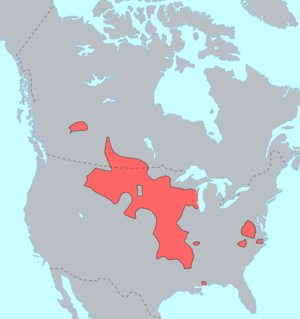
The Osage Indian tribe appears to be the most direct modern cultural descendant of the Cahokian culture which very likely spoke some early version of the Siouan languages associated with the geographic region shown below prior to European contact.


Some linguists think that this is part of a Macro-Siouan language family that also includes Iroquoian, and Caddoan language families.

An Ars Technica piece fleshes out what the city's life was like at its heyday ca. Y1K, and how it fell in a very accessible way. All of this is pretty much old news to readers of this blog, but it is told in a very engaging way.

Previous posts on this topic at this blog include:

* Prestige Necropolis In North America Better Understood

* Y1K: A Slice of Global History That Shaped The Modern World

* Monroe, Louisiana As The Source Of New World Civilization

Wednesday, December 14, 2016

Indo-Europeans Ate Lots Of Millet

Food history can be an excellent indicator of cultural migrations and shifts in climate over time.

There is a limited area in Europe where so called C4 plants like millet can grow. And, in those areas of Eastern and Central Europe, isotope data from ancient human remains demonstrate, consistent with archaeological evidence, that there was a shift from so called C3 plants to C4 plants in people's diets between the early and middle Bronze Age. Millet made up at least 40% of the average person's diet after the shift.

This was right around the time that Indo-Europeans arrived in these areas and the millet eaten in Europe at the time appears to be native to the European Steppe where Indo-European languages originated.

C4 plants include warm climate grasses like maize, millets, sorghum and sugar cane, among others, but maize did not arrive in Europe until after 1492, and sorghum and sugar cane don't grow well in Europe.

Millet consumption is also supported by historical accounts according to the paper cited:
Pliny the Elder (Naturalis Historiae XVIII, 83-84) and Columella (De Re Rustica, 2, 9, 14–16) who report the use of millet flour for the production of bread and a sort of porridge cooked in water and salt and often accompanied with vegetables and cheese and very rarely with meat. Pliny (XVIII.XXIV) exactly noted: “millet is used to prepare a very white puls (i.e. similar to present-day polenta). Panic, when ground and freed from bran, and millet as well, makes a porridge which, especially with milk, is not to be despised even in time of plenty”. Columella (2.9.19), agreed with Pliny and wrote: “bread is made of millet, and it may be eaten without distaste before it cools”.
The researchers "performed an isotopic study to unveil the dietary habits of the Celtic population Cenomani Gauls, from the necropolis of Seminario Vescovile in Verona (Italy) dated between the 3rd to 1st century BC." But, "other isotopic results from bone collagen analysis of some individuals proceeding from the Bronze Age necropolis of Olmo di Nogara, Verona (1600-1200 cal. BC) and of Arano di Cellore, Verona (2040-1890 cal. BC) support the hypothesis of C4 plants consumption, and in particular of millet in some areas of the Verona province."

Plant remains also support this hypothesis. As the paper explains:
Paleobotanical studies have shown the presence of domesticated C4 plants (in particular broomcorn or Panicum Miliaceum L. and foxtail millet or Setaria Italica L. Beauv.) in Central and Eastern Europe as early as 5000-4000 BC for Panicum Miliaceum and Late Bronze Age for Setaria Italica; while in Asia (China) and in the Caucasian region (Georgia) this is documented as early as ca. 10000 years B.P. Based on the botanical evidence, it seems that millet was first introduced into Central and Eastern Europe from the Steppe regions during the Neolithic period. Broomcorn millet seems to have arrived in the Mediterranean zone from the north or the north-east; in northern Italy, millet appears in early Bronze Age settlements (1700-1500 BC). The earliest records of foxtail millet (Setaria Italica L. Beauv.) come from Peigang and Cishan (North China) in the 6th millennium BC. In Europe the first carbonized seeds of foxtail millet appear in the 2nd millennium BC, from Bronze Age settlements in central Europe and France. It is also reported from the late Bronze age Kastanas site (Macedonia, Greece). In the Near East the earliest evidence for foxtail millet cultivation dates back to the Iron Age (c. 600 BC) in Tille Höyük, south-east Turkey. However, these data only indicate the presence of millet, but do not reveal their role in the human diet. 
C4 plants are typical of warm climates and their abundance is highly correlated with climatic factors, such as temperature, precipitation and the degree of aridity. In general, they are not present in environments where night temperatures are lower than 8 °C. Nowadays in Europe C4 biomass is very scarce; however these plants are naturally present in small proportions especially in the SW-Europe (e.g. Spain, Portugal, SW-France and Italy). Before the onset of agriculture, herbivores collagen isotopic δ13C values from S-Italy (32.6 to 13.3 ka B.P.) suggest that C4 biomass was practically absent (calculated vegetal biomass is around −25‰ vs V-PDB). Even during the warmer periods of the Late Miocene, fossil isotopic data indicate the absence of C4 biomass in central and southern Europe. Man has introduced certain species, such as millet, with a planting strategy in the warm season (i.e. summer), possibly as a response to Holocene arid periods. . . . . 
[T]he investigated necropolis is located in an area which is still today characterized by a fertile plane (called Pianura Padana or Po valley): it offers ideal climatic and environmental conditions for the cultivation of C4 plants during the warm seasons (spring-summer). Pliny the Younger (Epistulae, IV, 6,1) praised the Po Valley region and wrote “in regione Transpadana summa abundantia”. Since the Middle and Late Bronze age (1550-1170 years BC) this plane was characterized by intensive agriculture, pastoralism and the demand of large amounts of wood for building sites. This lead to a heavy deforestation of the whole Po plain and converting it into an artificial steppe devoted to cereal crops. Furthermore, paleoclimate records of lake sediments and speleothems show trends towards a drier climate, or alternating wet and dry climates, between 2500 and 2000 BP. This might have induced a change in cropping strategies and the consequent introduction of C4 plant cultivation (probably millet). 
Unfortunately, during the archaeological excavation of Verona, archaeologists have not found seeds (or charcoal) and the ceramic grave goods (vessels and others) are still under study and initially seem not to indicate macroscopic remains of organic waste. Some previous archaeobotanical studies of Neolithic, Bronze and Iron Age sites of the NE of Italy, and particularly of the area of Verona, seem to confirm the presence of Panicum Miliaceum and of Setaria italica among the carpological remains. Another comparative paleobotanical study relating to some Iron Age sites located between the Northern and Southern Alps (Eastern Switzerland, Austria and Northern Italy), also describes the presence of millet (Panicum Miliaceum L.) and foxtail millet (Setaria Italica L. Beauv.) remains. This is also confirmed by the results of the study about carpological remains found at the site of Oppeano (Verona), dated to the second Iron Age (about 6th to 3rd century BC) and located in the same geographical context of the Seminario Vescovile necropolis. The majority of the determined cereal remains correspond to millet (Panicum miliaceum L.) and foxtail millet (Echinochloa crus-galli L. Beauv. and Setaria italica L. Beauv). Thus, the Iron Age seems to be characterized by a greater crops specialization that fits with the assumption of the pursuit of a cereal type that best fits different climates (biomass increase with more efficiency in water use). In this case of the sandy Pianura Padana (Verona), the crops of millet were preferred, because it is a plant that adapts very well to poor substrates characterized by water scarcity during summer.

Ancient Han Chinese DNA

I missed this notable paper when it came out a year and a half ago. The northern Han Chinese gene pool has been stable since at least 1000 BCE.
The Han Chinese are the largest ethnic group in the world, and their origins, development, and expansion are complex. Many genetic studies have shown that Han Chinese can be divided into two distinct groups: northern Han Chinese and southern Han Chinese. The genetic history of the southern Han Chinese has been well studied. However, the genetic history of the northern Han Chinese is still obscure. 
In order to gain insight into the genetic history of the northern Han Chinese, 89 human remains were sampled from the Hengbei site which is located in the Central Plain and dates back to a key transitional period during the rise of the Han Chinese (approximately 3,000 years ago). We used 64 authentic mtDNA data obtained in this study, 27 Y chromosome SNP data profiles from previously studied Hengbei samples, and genetic datasets of the current Chinese populations and two ancient northern Chinese populations to analyze the relationship between the ancient people of Hengbei and present-day northern Han Chinese. We used a wide range of population genetic analyses, including principal component analyses, shared mtDNA haplotype analyses, and geographic mapping of maternal genetic distances. 
The results show that the ancient people of Hengbei bore a strong genetic resemblance to present-day northern Han Chinese and were genetically distinct from other present-day Chinese populations and two ancient populations. These findings suggest that the genetic structure of northern Han Chinese was already shaped 3,000 years ago in the Central Plain area.
Yong-Bin Zhao, et al., "Ancient DNA Reveals That the Genetic Structure of the Northern Han Chinese Was Shaped Prior to 3,000 Years Ago" PLOS One (May 4, 2015).

Charm Quark and Bottom (a.k.a. Beauty) Quark Mass Definitions

Executive Summary

It is possible in principle to convert the MS bar mass of a top quark, bottom quark (a.k.a. beauty quark) or charm quark to the pole mass of that quark, in practice, the current state of the art formula for making that conversion introduces a theoretical uncertainty into the pole mass value of several hundred MeV. This is only about 0.1% of the mass of the top quark, but is about 3% for the bottom quark and about 9% or more for the charm quark. The MS bar mass determinations for the bottom and charm quarks are currently ten times as precise.

But, while the pole mass of a top quark can be determined directly, since it does not hadronize, the pole masses for all other quarks cannot be determined directly because they are always confined in hadrons.

The theoretical error introduced by the conversion factor undermines the immense progress that has been made in recent years in precisely determining the MS bar masses of the heavy quarks by perturbative QCD methods in recent years.

This is a problem because some important particle physics calculations that involve perturbative renormalization physics that involve high energies work best if you use the pole mass rather than the MS bar mass. So, if we are going to calculate the pole masses of bottom quarks and charm quarks, we still need to use the non-perturbative QCD methods of lattice QCD to determine them instead.

Background

There are multiple different definitions of the mass of a quark which are particular relevant in perturbative QCD calculations (i.e. calculations involving the Standard Model equations for interactions involving quarks and gluons at high energy scales). 

Perturbative QCD is less accurate to the point of becoming invalid at low energies, because the more precisely non-perturbative QCD effects that it ignores for mathematical expediency become significant at low energies and in circumstances like conversions from MS bar mass to pole mass. The math is too hard to calculate the full non-perturbative QCD equations analytically (i.e. exactly using algebra and calculus), however, so to make non-perturbative QCD calculations we have to make a discrete approximation to these continuous equations and work out a numerical approximation of the results using methods known as "lattice QCD."

Theoretically, the "pole mass" which is the rest mass of a free quark of a particular type at an energy scale equal to its mass, is the most "natural" definition of the quark mass and is important in some kinds of calculations. The normal definition of the masses of the leptons (electrons, muons, taus, and corresponding neutrinos) is equivalent to the pole mass.

But, pole mass can't be measured directly for any kind of quark other than a top quark, as all other kinds of quarks are found only found in hadrons (e.g. protons, neutrons, pions and kaons), rather than in a free state.

For these quarks, it is easier to use another mass definition, the most popular of which is the MS bar definition.

MS bar masses at an energy scale equal to MS bar mass are of the same order of magnitude as pole masses, and in principle can be converted according to an exact formula (which involves the sum of terms in an infinite series). MS bar masses are defined in a way that is always less than the pole mass for heavy quarks.

Pole Masses v. MS bar Masses for Heavy Quarks

In the case of the top quark, the conversion formula is very precise, converges rapidly, and has an uncertainty of only about one part per thousand.

The conversion formula works less well for the bottom quark (a.k.a. beauty quark), converging slowly and providing less precision, and works even less well for the charm quark where the formula diverges almost immediately. 

The first few terms of the formula are as follows, assuming a strong force coupling constant at the Z boson mass energy scale of the global average value of 0.118:

mt pole = (mt MS bar)(1 + 0.046 + 0.010 + 0.003 + 0.001 + · · ·)
mb pole= (mb MS bar)(1 + 0.096 + 0.048 + 0.035 + 0.033 + · · ·)
mc pole= (mc MS bar)(1 + 0.16 + 0.16 + 0.22 + 0.39 + · · ·)

Basically, the conversion for MS bar mass to pole mass introduces an uncertainty of hundreds of MeVs to the mass of the bottom and charm quarks (whose masses are about 4,200 MeV and 1,275 MeV respectively).

The good news noted in the paper discussed below, is that for processes with only virtual bottom and charm quarks, the more precisely determinable MS bar mass can be used, making the calculation of PDFs (parton distribution functions) which tell you what particles come out of a smashed hadron (often including particles other than the valence quarks of the hadron, for example, causing charm quarks to be emitted from a proton or neutron which has only up or down quarks as valence quarks) more accurate when this is possible.

The bad news is that if the process has an end state that includes bottom and/or charm quarks, there is no escaping the need to use the pole mass and the accuracy of the calculations cannot be improved by using the more precisely known MS bar mass.

The Paper

This is explained in Richard D. Ball, "Charm Production: Pole Mass or Running Mass" (December 12, 2016), and the abstract of the paper is shoddy to the point of being misleading, but the body of the paper tells the story well enough.

The introduction of the paper explains that:
Inclusive processes involving massive quarks are an important ingredient of LHC physics, not least because of their role in determining PDFs. Uncertainties in heavy quark masses can lead to substantial contributions to PDF uncertainties, and thus to uncertainties in predictions for LHC crosssections for a wide range of processes. 
Perturbative coefficient functions can be renormalized to depend on either the pole mass m or the MS running mass m(µ). The perturbative relation between them is now known to four loops, and for top the choice is essentially immaterial. However for charm and beauty nonperturbative corrections are more substantial, and while the MS charm and beauty masses can be determined rather precisely (to a few tens of MeV) through nonperturbative lattice or sum rule calculations, their pole masses are subject to large uncertainties (a few hundreds of MeV). 
Global PDF fits traditionally use pole masses. This is because the experimental observables used in the fits are generally inclusive, to avoid large uncertainties from final state effects. Heavy quarks in the final state are dealt with in the perturbative calculations by putting them on-shell: hadronisation corrections are then of relative order Λ/m, and thus power suppressed. The on-shell condition naturally leads to the mass dependence from heavy quarks in the final state being expressed in terms of the pole mass. In this short note, we will re-examine the possible use of the MS running mass in PDF determinations, and consider other ways in which uncertainties due to charm mass dependence might be reduced at LHC.
The conclusion of the paper explains that:
We have shown that, while for processes with only internal charm quark lines (such as processes with no charm in the final state, or semi-inclusive processes) it is straightforward to calculate using either pole mass or running mass in the hard cross-section, for inclusive processes with charm in the final state there no advantage to using the running mass, since the kinematics produces a nontrivial dependence on the pole mass which cannot be avoided without spoiling the factorized perturbative expansion. It follows that any empirical determination of the charm quark mass from inclusive charm production data has an intrinsic limitation due to nonperturbative corrections of a few hundred MeV. It is easy to see that these considerations generalise straightforwardly to inclusive hadronic processes such as W c or Z c-anti-c  production, and indeed to inclusive beauty production, though here the effect will be less significant. 
A number of recent perturbative determinations of the MS charm mass from inclusive data claim an uncertainty as small as 50 MeV, competitive with the nonperturbative results. The reason for this small uncertainty is probably the use of the theoretical assumption that charm is produced entirely perturbatively, which greatly increases sensitivity to the charm mass. However it is clear from the poor convergence of Equation (4) that perturbation theory close to the charm threshold is unreliable: charm production is subject to large nonperturbative corrections. Relaxing the assumption by fitting a charm PDF, significantly reduces the dependence of the PDFs on the charm mass. This in turn reduces the dependence of high energy cross-sections required at LHC on the charm mass, and thus increases their precision. It will also presumably increase the uncertainty on any empirical determination of the charm mass from inclusive data to a few hundred MeV.

Tuesday, December 13, 2016

New Alaskan Ancient DNA

Recent genome-wide studies of both ancient and modern indigenous people of the Americas have shed light on the demographic processes involved during the first peopling. The Pacific northwest coast proves an intriguing focus for these studies due to its association with coastal migration models and genetic ancestral patterns that are difficult to reconcile with modern DNA alone. Here we report the genome-wide sequence of an ancient individual known as "Shuká Káa" ("Man Ahead of Us") recovered from the On Your Knees Cave (OYKC) in southeastern Alaska (archaeological site 49-PET-408). The human remains date to approximately 10,300 cal years before present (BP). We also analyze low coverage genomes of three more recent individuals from the nearby coast of British Columbia dating from approximately 6075 to 1750 cal years BP. From the resulting time series of genetic data, we show that the Pacific Northwest Coast exhibits genetic continuity for at least the past 10,300 cal BP. We also infer that population structure existed in the late Pleistocene of North America with Shuká Káa on a different ancestral line compared to other North American individuals (i.e., Anzick-1 and Kennewick Man) from the late Pleistocene or early Holocene. Despite regional shifts in mitochondrial DNA haplogroups we conclude from individuals sampled through time that people of the northern Northwest Coast belong to an early genetic lineage that may stem from a late Pleistocene coastal migration into the Americas.
John Lindo, et al., "Ancient individuals from the North American Northwest Coast reveal 10,000 years of regional genetic continuity" (Pre-Print December 13, 2016).


MA-1 is a very ancient genome from the Altai. Anzick-1 and Kennewick man are some of the oldest ancient genomes from the North American founding population. The numbered samples are the more recent ancient genomes from the Northwest coast in the same study. Saaqaq is a Paleo-Eskimo genome and the Inuit are contemporary Eskimos. The South American sample is of contemporary indigenous South Americans. The Siberian sample is of contemporary indigenous Siberians. The blue arrow indicates subsequent partial admixture.

The claim of population structure from a site in or near Beringia long after more people in the Native American founding population migrated to the South is notable. As a commentator at the Eurogenes blog explains:
capra internetensis said... 
@Matt
The new Alaskan genome might have big picture implications actually - in ADMIXTURE he comes out as about half Mal'ta, despite having umpteen Amerindian components to choose from, while Anzick-1 and Kennewick do not (the latter does have a bit of it though). And in TreeMix he is basal to all Amerindians without an edge, or groups with North Amerindians but with an edge from Europe. It might be due to contamination, but if not it looks like some kind of very old population structure. The supplementary information is not out yet though so hard to judge any of this.  
Stay tuned.

Monday, December 12, 2016

Aboriginal Australian mtDNA Supports Paradigm

The new Aboriginal Australian mtDNA data supports the paradigm of a single entry to Australia ca. 50kya with no subsequent mtDNA additions. About 77% of Aboriginal mtDNA remains in the Aboriginal gene pools (the other 23% is 98% European), while only about 20% of Aboriginal Y-DNA is indigenous.

Sad Inca Puppies

The Tibetan Mastiff can take high altitude better than generic dogs. . . . The Tibetan Mastiff picked up some of those useful variants from local wolves, even though the amount of admixture wasn’t large. . . .

Naturally you are now worrying about sad Inca puppies – did they suffer from hypoxia? There are canids in South America, like the maned wolf and the bush dog, but they are probably too divergent to be able to hybridize with dogs. The chromosomes are different, so pre-Columbian dogs probably couldn’t acquire their alleles. Moreover, the dogs of the Amerindians seem to have done poorly in competition with Eurasian dogs: I know of only a few breeds [the Carolina Dog, for example] that are known to have significant pre-Columbian ancestry. Perhaps Amerindian dogs were also scythed down by Eurasian diseases.
Via West Hunter.

I don't have the answers, but the questions are good ones.

Friday, December 9, 2016

Historical Examples Of Major Types Of Conquest and Colonization

In the area of historical genetics, historical linguistics and anthropology, the broad outlines of history are characterized by some major processes that repeat themselves. I identify nine main categories (as well as one hypothetical category for which there are no historical examples) and some subcategories within them, below, and assign major historical examples of them to these categories while identifying the main circumstances in which each occurs.

Comments regarding initial examples in any of the categories, categories that I have overlooked, or examples that you believe I have incorrectly categorized or described, are welcome.

Expansion Into Virgin Territory

One is a rapid expansion into virgin territory with no current inhabitants. Sometimes, this happens because the new arrivals are genuinely the first people to enter the new territory, as in the case of Papua New Guinea and Australia ca. 50,000 BCE, North and South American ca. 12,000 BCE, most of the rest of Oceania during one of the later Austronesian expansion ca. 3000 BCE to 1200 CE, and Norse settlement of Iceland ca. 870 CE.

At other times, a previously inhabited area is abandoned, usually for reasons related to climate, and then repopulated. Examples of this include the repopulation of northern Eurasia following the Last Glacial Maximum which was reached ca. 18,000 BCE with northern Europe largely repopulated by about 13,000 BCE, and the repopulation of the area around Lake Chad in Northern Africa, which was repopulated following an arid period, by the proto-Chadic people ca. 5600 BCE, and the Indo-European settlement of the Tarim Basin in what is now Inner Mongolia ca. 2000 BCE.

The rate at which expansion into virgin territory takes place can be shocking fast. For example, it took only about 1000 years for the founding population of Native Americas to settle in every part of North America and South America. 

Near Total Replacement

Another pattern sometimes seen is the near total replacement of the current inhabitants of a territory by a new population with a reasonable balance of men and women, with only slight admixture, if any, and ongoing cultural impact from the original inhabitants. 

Examples of this include the replacement of Denisovans (and possibly also other species of hominins including Homo Erectus and Homo Florensis) with modern humans in Asia at least ca. 50,000 BCE, the replacement of Neanderthals with Cro-Magnon modern humans in Europe ca. 40,000 BCE, most of the expansion of the Fertile Crescent Neolithic Revolution outside the Fertile Crescent ca. 6000 BCE to 4000 BCE in Europe, in West Asia and the Indus River Valley, and the replacement of Native Americans with Europeans in most of North America ca. 1500 CE to 1900 CE.

This is probably what happened in Madagascar in which a mixed Bornean and Bantu population almost totally replaced a marginal existing hunter-gather population when they arrived ca. 500 CE.

Near total replacement is typically what happens when the incoming colonists are completely technologically superior to the current inhabitants, who may also be at a weak point due to disease or climate or some other reason, and have little or nothing in common with each other culturally at the outset.

Typically a farming and metal using society facing a terrestrial hunter-gather society will face this scenario in an area suitable for farming. 

Partial Replacement With A Nearly Complete Culture Shift

A variation on the replacement paradigm is one in which there is significant male and female migration to the territory, and a near complete cultural transition, but a much larger population genetic contribution is made to the resulting hybrid population by the current inhabitants.

An example of this includes the Yayoi conquest of Japan ca. 1000 BCE, which left very little trace of the Jomon language (surviving only as a small group of Ainu speakers who influenced the Japanese language very little) or culture, but left a modern Japanese population that has substantial genetic ancestry from the Jomon people.

This seems to be a good description of the process by which Austronesian migrants from Borneo incorporated Bantu people from East Africa before settling in Madagascar ca. 500 CE.

This probably best describes Indo-European expansion in Eastern and Central Europe and the Balkans.

The circumstances for this are similar to those for near total replacement, but in this case the current inhabitants are not so overwhelmingly overshadowed in technology or "staying power". This could be the case when a metal using farming society encounters a non-metal using (or much less advanced metal using) farming or sedentary fishing village society.

Partial Replacement With Incomplete Culture Shift

A third variation on the replacement paradigm involves an incoming people who settle in a more or less gender balanced way in a new area, but neither completely replace the existing inhabitants, nor complete replace the existing language and culture, but are also not absorbed culturally into the current population.

An example of this would be the Swedish migration into Finland, ca. 1150 CE, resulting in a dual Swedish-Finnish linguistic environment, and a significant population with Swedish ancestry and culture, without replacing the existing population.

Other examples would include the Norman Conquest of England ca. 1066 CE, English migration to and rule of Northern Ireland, starting ca. 1169 CE, and the Jewish migration to Israel commencing in the late 19th century, and the formation of a state there in 1948 CE. The Jewish migration is particularly notable as it involved an extreme rare resurrection of the Hebrew language which had previously been used only for liturgical purposes.

The Turkish conquest of Anatolia ca. 11th-12th century CE, seems to be an example of this based upon the modern population genetic makeup of Turkey which does not show a particularly strong male bias in the Central Asian contribution to its genetics.

This probably best describes Indo-European expansion into Anatolia, Iran and South Asia. It also probably best describes Semitic migration from the Levant into Mesopotamia giving rise to a language shift from the Sumerian language to the Akkadian language.

Bantu impact on Pygmy communities, despite involving a complete language shift, ca. 1000 BCE, are probably best characterized in this manner, because aspects of Pygmy culture other than language survived and African Pygmies retain significant Pygmy genetic components and some Pygmy language substrate words in their current Bantu language.

The circumstances for this involving a technologically or militarily superior group entering an area which is either only modestly less advanced technologically, or is better adapted to the local environment which is not ideal for the domesticates or technologies of the invaders.

Partial Replacement Producing A Hybrid Language and Culture

Superficially, partial replacement producing a hybrid culture looks similar to partial replacement with incomplete culture shift, but the difference is that rather than resulting in two or more co-existing cultures that are each distinct, there is a melting pot effect that gives rise to a new language and new culture that cannot be fairly described as a mere dialect of one of the languages or variant on one of the cultures, because both contributing peoples make significant contributions to the resulting language and culture in a process of balanced ethnogenesis.

This is much more rare, and requires both contributing cultures to be more or less equal in socio-economic status in this territory.  See this discussion of mixed languages that are not creoles, citing languages such as Media Lengua, Mednyj Aleut or Michif, as examples of cultures of this type.

Usually it happens at the frontiers of an expanding culture where the incoming culture has moved out of the range of conditions where it has a decisive advantage, and is a short lived transitional culture that dies as the expanding culture adapts to the new conditions at the frontier and asserts its dominance.

Mass Immigration With Assimilation

Yet another variation on the continuum of replacement paradigm involves a significant mass migration of people from one territory into another territory, usually in a more or less gender balanced way into the new territory, with only modest cultural impact on the new territory, as the immigrants heavily assimilate into the culture of the new territory.

Examples of this would include mass importation of slaves to North America ca. 16th to 19th centuries CE, and mass migration to the United States after English colonial migration has largely ended, in the late 19th century and early 20th century CE mostly from Europe and to a lesser extent East Asia, and in the late 20th century, mostly from Latin America.

There are examples of this that involve male dominated migrants who migrate a foreign workers and assimilate and take local wives, and that involve female dominated migrants who often immigrate to become wives (e.g. Chinese women migrating to early Japan), as well as gender balanced mass immigration with assimilation.

This usually happens when the current inhabitants are technologically advanced for their time and economically prosperous and the people who are migrating to the area are, at least for the moment, experiencing bad economic times, even if their society as a whole is not at a particular technological or military disadvantage. Often the migrants come under economic or physical duress.

Male Dominated Conquest

A third common pattern is for a male dominated group, often of fairly closely paternally related men, to assume leading roles in a new society in which they marry and have children with local women, men carrying their Y-DNA come to make up a substantial share of all men in the hybrid population that results, and their culture (and often language) comes to have a profound and leading impact on their new hybrid population.

Examples of this include Chadic ethnogenesis ca. 5600 BCE, Berber expansion in North Africa ca. 3700 BCE, the Munda expansion into South Asia ca. 3000 BCE to 2500 BCE, Bell Beaker expansion in Europe in the earlier part of a period from ca. 2900 BCE to 1300 BCE, Indo-Aryan migration into South Asia starting ca. 1900 BCE, and Southeast European colonization of Latin America starting in 1492 CE.

Melanesian men conquered Taiwanese aboriginal descended Lapita people in Tonga and Vanuatu before they expanded further into Oceania probably ca. 500 CE, and definitely after 300 BCE. 

The Books of Numbers and Book of Judges in the Hebrew Bible describe multiple instances of this kind of conquest by the Jews in the Iron Age Levant (ca. 1200 BCE), with the caveat that the invaders may have had a significant number of women, even though the men of the conquered people were slaughtered while the women and children were assimilated in subordinate rules into Jewish civilization.

Some parts of Bantu expansion in Africa, ca. 1000 BCE to 500 CE, appear to have had this character, for example, in Southeast Africa. But, other parts of Bantu expansion in Africa involved partial replacement with nearly complete culture shift, or total replacement.

The initial proto-Bell Beaker migration to Iberia ca. 2900 BCE, was probably of this character, although the subsequent Bell Beaker expansion from Iberia to Morocco, Western Europe, Central Europe and Northern Europe over the next several centuries was probably a partial replacement with either a nearly complete or incomplete cultural shift.

Male dominated conquest can often lead to a hybrid culture if the conquered population rather than total replacement of the existing culture, although the extent of cultural replacement as opposed to hybridization varies with the staying power, demographic proportion, and socioeconomic parity of the incoming and current populations respectively in the new territory. The Chadic, Bell Beaker, Hindu and Latin American cultures all seem to have this hybrid character.

This usually happens when the current inhabitants are in a major state of decline, often due to a major climate event, and the conquering group is itself in disarray or hard times (which is why a band of men is roaming around for someplace new to live) but has technologies or cultural adaptations better suits to the changing conditions in climate or social organization (or, for example, because the newcomers better understand how to exploit resources newly discovered in the territory than the current inhabitants do) in light of the circumstances that the current inhabitants are struggling with themselves.

There is suggestive, but hardly definitive evidence that the Indo-European language family came into being in a context that involved men from one culture and women from another in a European steppe community ca. 4000 BCE.

I am not aware of any historical cases of female dominated conquest, by analogy to this pattern. There are a few historical candidates for matriarchal societies, none definitively confirmed to have existed or to have conquered other countries, but, even those cases would not be a match to the historically not uncommon pattern of a group of men conquering a territory, becoming dominant in the society conquered, and taking local women as wives.

Conquest With Minimal Genetic Impact But Great Cultural Impact

A fourth pattern, which is less common but is seen, involves a small group of outsiders who come to rule a territory, and have a very significant cultural and/or linguistic impact, but make only a slight population genetic contribution to the community and do not entirely eliminate all aspects of the pre-existing culture. Sometimes this is accomplished with a foreign ruler, sometime with missionaries, and sometimes, although less often, through trade relations.

Examples of this include the Magyar rule of Hungary starting ca. 900 CE[1] and British rule in India from ca. 18th century CE to 1948 CE. Most of the European colonies in Africa, the Middle East, and Asia in the 19th and 20th centuries fit this pattern. In particular, this applies to British rule of Ireland outside Northern Ireland from ca. 1169 CE to 1923 CE.

The circumstances in which this occurs are similar to those of male dominated conquest, but with less of a disparity in technology or adaptation to current conditions, although still enough to rule, and often with a smaller original pool of single male migrants.

Conquest With Only Modest Genetic and Only Modest Lasting Cultural Impact

There are times when outsider rule a territory for a significant period of time, but have only modest population genetic or cultural impact.

Examples of this include Roman conquest of the Eastern Roman Empire, which retained the Greek language and strong influences of the Greek culture ca. 168 BCE, Moorish rule of Spain ca. 8th century CE to 1492 CE, and most of the Mongolian Empire ca. 1206 CE to 1368 CE.

This is typical of instances when the conquerers are militarily superior but not technologically superior.

UPDATE December 12, 2016:

[1] One reason that the original Hungarians may have seemed to have minimal genetic impact on Hungarians is that early ancient mtDNA profiles of them contained significant misclassifications of their mtDNA haplogroups revealed in later higher resolution ancient mtDNA profiles of the same individuals. 

Good Advice For Communicating About Science

Good advice on communicating about science from the 4gravitons blog:
If there’s one thing the Center for Communicating Science drummed into me at Stony Brook, it’s to be careful with words. You can teach your audience new words, but only a few: effectively, you have a vocabulary budget. 
Sometimes, the risk is that your audience will misunderstand you. If you’re a biologist who talks about treating disease in a model, be careful: the public is more likely to think of mannequins than mice. . . . 
[N]obody is going to misunderstand “pupillary response”. Nonetheless, that chain of reasoning? It takes time, and it takes effort. People do have to stop and think, if only for a moment, to know what you mean. 
That adds up. Every time your audience has to take a moment to think back and figure out what you just said? That eats into your vocabulary budget. Enough moments like that, and your audience won’t have the energy to follow what you’re saying: you’ll lose them. 
We don’t need to dumb things down to be understood. (Or not very much anyway.) We do need to be careful with our words. Use our vocabulary budget sparingly, and we can really teach people. Spend it too fast…and we lose them.
I would add that the same principle applies to any technical field and even to science fiction and fantasy writing. A small sprinkling of specialized vocabulary words can convey authenticity and the flavor of what you are writing about, without exhausting your "vocabulary budget" and wearing out the audience. 

If you talk about a technical subject to lay persons often, develop a standard repertoire of substitutes for technical vocabulary, and of non-technical but accurate descriptions of technical concepts.

Neolithic Round Mound Graves

Chamber graves in the form of round mounds appeared in the post-Neolithic, pre-Bell Beaker period in Britain and Ireland (and probably the rest of Western and Northern Europe, starting "probably a few centuries after the earliest introduction of domesticated livestock and cereals and the first pottery at the outset of the Neolithic." This is a distinctive typological feature of Neolithic European sites, particularly in areas that were part of the Megalithic movement.

There were a couple of major wave of mound building in this time period, but it petered out in the late Neolithic (towards which time agriculture was also collapsing).
Mound building was only sporadic in the late Neolithic on mainland Britain. One ‘great mound’ – eventually reaching over 35m in diameter and over 6m high – was built over a burial site that had been used repeatedly for centuries at Duggleby Howe in eastern Yorkshire at the start of the third millennium BC. A few round barrows were built over small cemeteries of cremated remains around 3200-3000 BC. 
At Killeaba, Ramsey, it seems that a natural mound was used for burial at this time – something that Rachel demonstrated through radiocarbon dating during her PhD research. This site is particularly interesting because the same mound was also used as a burial ground in the Early Bronze Age. In Britain a series of exceptionally large round mounds such as the famous Silbury Hill near Avebury were built near large enclosures such as henges or palisade enclosures late in the Neolithic. These do not seem to have contained burials.
Pre-Indo-European cremation is very unusual in Europe which is why I highlight that passage. The shift from burial mounds to mounds for other purposes is also notable.

There are also Bronze Age mounds which will be discussed at the blog in a future post.

The source is the "Round Mounds of the Isle of Man" blog which is associated with an ongoing archaeological project on the subject, in an increasingly common use of the blog medium.

The Cosmological Constant May Not Be A Constant After All

Evidence preferring a "running" cosmological constant over a constant one now has 4 sigma significance according to the review article below, almost enough to reject the cosmological constant entirely as an explanation for dark energy phenomena.
Next year we will celebrate 100 years of the cosmological term, Λ, in Einstein's gravitational field equations, also 50 years since the cosmological constant problem was first formulated by Zeldovich, and almost about two decades of the observational evidence that a non-vanishing, positive, Λ-term could be the simplest phenomenological explanation for the observed acceleration of the Universe. This mixed state of affairs already shows that we do no currently understand the theoretical nature of Λ. In particular, we are still facing the crucial question whether Λ is truly a fundamental constant or a mildly evolving dynamical variable. At this point the matter should be settled once more empirically and, amazingly enough, the wealth of observational data at our disposal can presently shed true light on it. In this short review I summarize the situation of some of these studies. It turns out that the Λ=const. hypothesis, despite being the simplest, may well not be the most favored one when we put it in hard-fought competition with specific dynamical models of the vacuum energy. Recently it has been shown that the overall fit to the cosmological observables SNIa+BAO+H(z)+LSS+BBN+CMB do favor the class of "running" vacuum models (RVM's) -- in which Λ=Λ(H) is a function of the Hubble rate -- against the "concordance" ΛCDM model. The support is at an unprecedented level of ∼4σ and is backed up with Akaike and Bayesian criteria leading to compelling evidence in favor of the RVM option and other related dynamical vacuum models. I also address the implications of this framework on the possible time evolution of the fundamental constants of Nature.
Joan Sola, "Cosmological constant vis-a-vis dynamical vacuum: bold challenging the ΛCDM" (December 7, 2016).